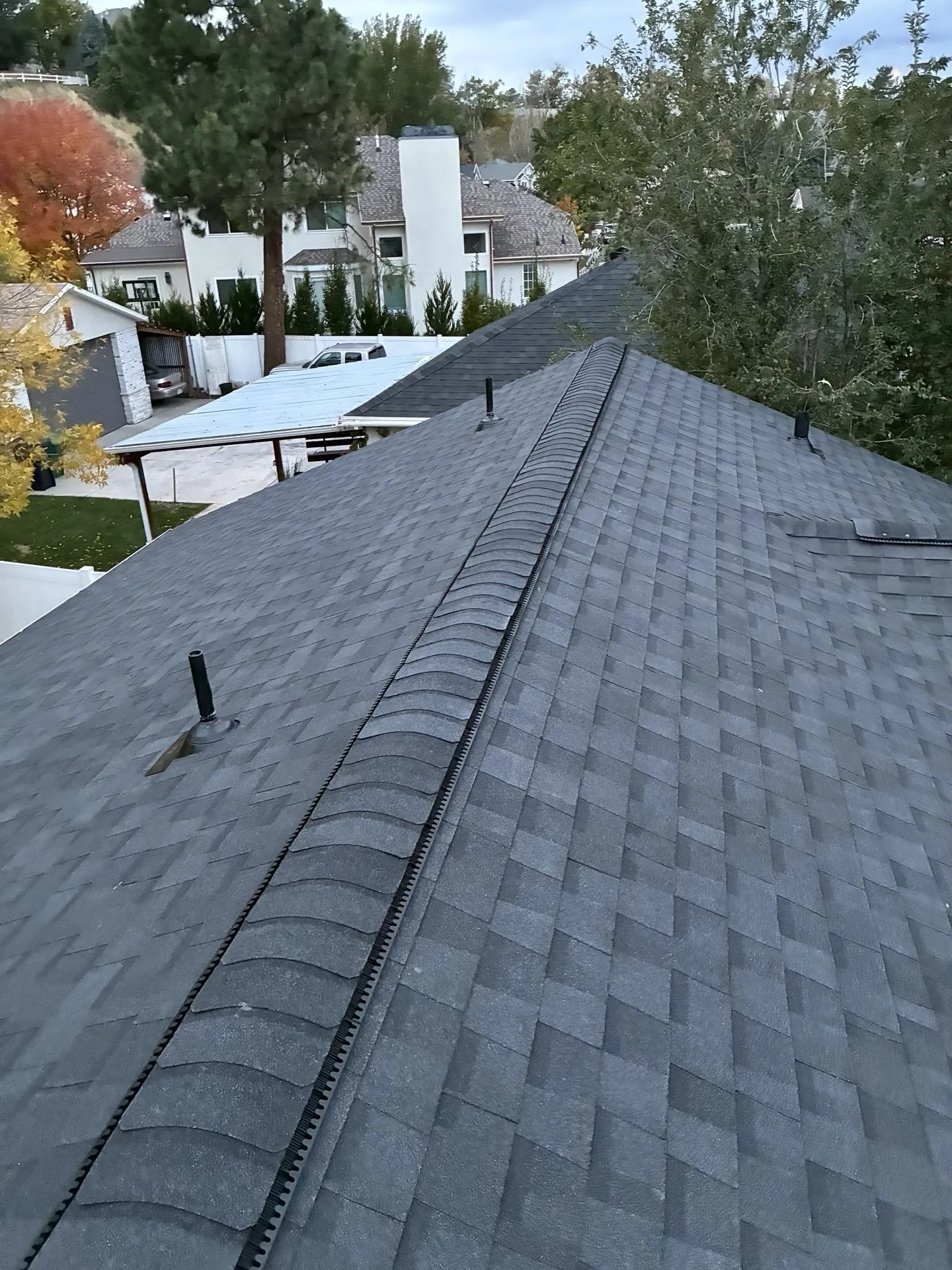
QUICK ANSWER: After the April 2, 2026 Wasatch Front storm, every homeowner in Salt Lake, Davis, Weber, and Utah Counties should inspect for 7 specific issues within 30 days: (1) blown-off or lifted shingles, (2) hail dents in gutters and soft metals, (3) displaced ridge caps, (4) separated flashing at chimneys and vents, (5) loose or missing pipe boots, (6) granule loss at downspouts, and (7) new interior ceiling stains. Most damage is invisible from the ground — schedule a free professional inspection before your insurance filing window closes.
On April 2, 2026, a fast-moving storm system swept the Wasatch Front with sustained winds of 45 to 55 mph and gusts reaching 60 to 75 mph in parts of Davis, Weber, and northern Salt Lake Counties. The National Weather Service Salt Lake City office recorded localized hail cores along the I-15 corridor between Bountiful and Layton, and several Utah County communities reported brief heavy rain with small hail. Three weeks later, most of the visible damage — downed branches, knocked-over patio furniture — has been cleaned up. The less visible damage sitting on Utah roofs right now is what homeowners need to find before the next storm or before their insurance claim window narrows.
This guide walks through the 7 post-storm checks every Wasatch Front homeowner should run this week, with specifics on what wind speeds do to shingles, what hail does to different materials, and how to handle an insurance claim for damage from the April 2 event. Every item in this checklist can be checked from the ground — no ladders, no roof-walking.
Why the April 2, 2026 Storm Caused More Damage Than It Looked Like
Wasatch Front spring storms are deceptive. The April 2 event looked like a standard frontal passage from the ground — strong winds, some rain, over in a few hours. But the damage profile on Utah roofs tells a different story, and the pattern has shown up in every post-storm inspection Frame Roofing Utah has completed in the past 18 days.
Two factors amplified the roof damage from this storm. First, the winds hit during a dry period, which meant shingle seal strips had thermally cycled through several warm days and were more brittle than they would be after a wet, cooler week. Second, the gust direction was westerly to northwesterly, meaning it hit the side of most Utah homes that takes the most UV exposure — the side with the oldest, driest shingles. The result is a high incidence of lifted-but-reseated shingles: the wind broke the seal, the shingle flapped, and when the wind dropped it laid back down looking intact. A leak is now one rain event away.
The 7-Point Post-Storm Roof Checklist
01Blown-Off or Lifted Shingles
Stand in your front yard and back yard and scan the roof plane-by-plane. Look for any shingle that is crooked, folded, or missing entirely. Then walk the property perimeter — any shingle pieces, tab fragments, or nails on the ground, in shrubs, or under gutters are diagnostic. The most common pattern after the April 2 storm is a single shingle missing on a west or northwest-facing plane, with debris found 20 to 40 feet away in the downwind direction.
02Hail Dents in Gutters and Soft Metals
Walk your perimeter again looking only at aluminum surfaces. Gutters, downspouts, mailbox, AC condenser fins, gas grill lids, and vehicle hoods parked in the driveway. Dents in these "soft metals" are the most reliable ground-level indicator that hail was large enough to damage your shingles. Hail along the April 2 corridor was reported at 0.5 to 1 inch — enough to dent aluminum and bruise asphalt shingle mats without leaving obvious top-side damage.
03Displaced or Missing Ridge Caps
Ridge cap shingles sit at the peak of your roof and at every hip. Because they are exposed on two sides, they catch wind loads first and are the first shingles to lift in a storm. Scan the top line of every roof plane — any cap that is lifted, rotated, or missing creates a direct path for water into the attic. This is a top-three post-storm failure point on Utah roofs and one of the easiest to spot from the ground with binoculars.
04Separated Flashing at Chimneys and Vents
Check the metal flashing around every chimney, skylight, and sidewall. You are looking for gaps, lifted edges, or sealant that has pulled away. Flashing seams are the second most common leak source after missing shingles, and wind-driven rain from the April 2 storm drove water up and under flashing that was already aging or improperly sealed. If you see any daylight between flashing and siding, that is a priority repair.
05Loose or Missing Pipe Boots
Pipe boots are the rubber or lead collars around plumbing vents that stick up through your roof. They have the shortest lifespan of any roof component — typically 10 to 12 years — and they are almost always the first failure point after a wind event. Count your pipe boots (most Utah homes have 2 to 4). If any are cracked, leaning, or missing, you have an open hole in your roof that needs immediate attention.
06Granule Loss at Downspouts
Look at the splash block at the base of each downspout. A thin layer of coarse black sand is normal — shingles shed granules over their lifetime. A thick pile of granules, or granules mixed with shingle fragments, is a hail indicator. Compare the granule volume at different downspouts: if the west or northwest corner has significantly more than the south corner, that plane was hit hardest on April 2 and needs inspection.
07New Interior Ceiling Stains and Attic Moisture
Walk every room and scan every ceiling. Look for yellow, brown, or ring-shaped stains that were not there before April 2. Check closet ceilings and garage ceilings — these are where small leaks show first because the surfaces are less frequently seen. If you have attic access, look along the rafters with a flashlight for dark streaks, staining on insulation, or daylight visible between boards. Active leaks require immediate tarp-and-dry service.
What Wind Speed Actually Damages a Utah Roof?
Standard 3-tab asphalt shingles are rated for 60 mph winds; architectural shingles are rated 110 to 130 mph. But ratings are for new, properly installed shingles in factory condition. In the real world, shingles start failing at 50 to 55 mph once they are more than 10 years old, or if they were nailed too high (above the nail line) during installation, or if their seal strips have been compromised by thermal cycling. The April 2, 2026 storm's 60 to 75 mph gusts were well above this real-world failure threshold for any Utah roof installed before 2016.
Wind damage also compounds: a shingle that lifts once and reseats looks normal but has a broken seal strip, which means the next 40 mph storm will finish it off. This is why post-storm inspections matter even when nothing appears obviously wrong.
Insurance Claim Timing for the April 2 Storm
Utah homeowners insurance policies typically require notice of a loss "as soon as reasonably possible" and allow formal claim filing within one year of the event. In practice, carriers treat claims filed within 60 days as routine, 60 to 180 days as standard, and past 180 days as scrutinized. For the April 2, 2026 storm, the practical claim window closes around June 1, 2026 — after that, carriers increasingly argue the damage was preexisting or caused by a different event.
The insurance claim process follows a specific sequence. Document the storm date and approximate time. Photograph all damage before any repairs or cleanup. Open a claim with your insurer. Get a licensed Utah roofing contractor inspection within 30 days. Have the contractor present at the adjuster's inspection. If the adjuster's scope is short of the repair reality, your contractor files a supplement. Most properly documented claims close within 45 to 60 days with full coverage minus deductible.
When to Call a Professional Inspector
Call a Utah licensed roofing contractor for a professional inspection if any of the following apply: your roof is more than 10 years old, you see any checklist item from #1 through #7 above, you have neighbors with visible storm damage (you are in the same wind corridor), you have any interior water stain that is new since April 2, or you are planning to sell your home in the next 12 months. Post-storm inspections from Frame Roofing Utah are free, fully documented with photos, and include a written scope whether you file a claim or not.
Frame Roofing Utah is actively dispatching crews across the Wasatch Front for April 2026 storm response inspections. Call 435-292-8802 or schedule your free inspection online. We handle all insurance documentation and adjuster coordination, and every repair is backed by a 10-year workmanship warranty.
Sources & References
- National Weather Service — Salt Lake City — April 2, 2026 wind and precipitation data
- Deseret News — Utah — Storm event reporting and local impact coverage
- National Roofing Contractors Association (NRCA) — Wind and hail damage identification standards
- Utah Division of Professional Licensing (DOPL) — Contractor verification
- Utah Insurance Department — Consumer resources for property claims