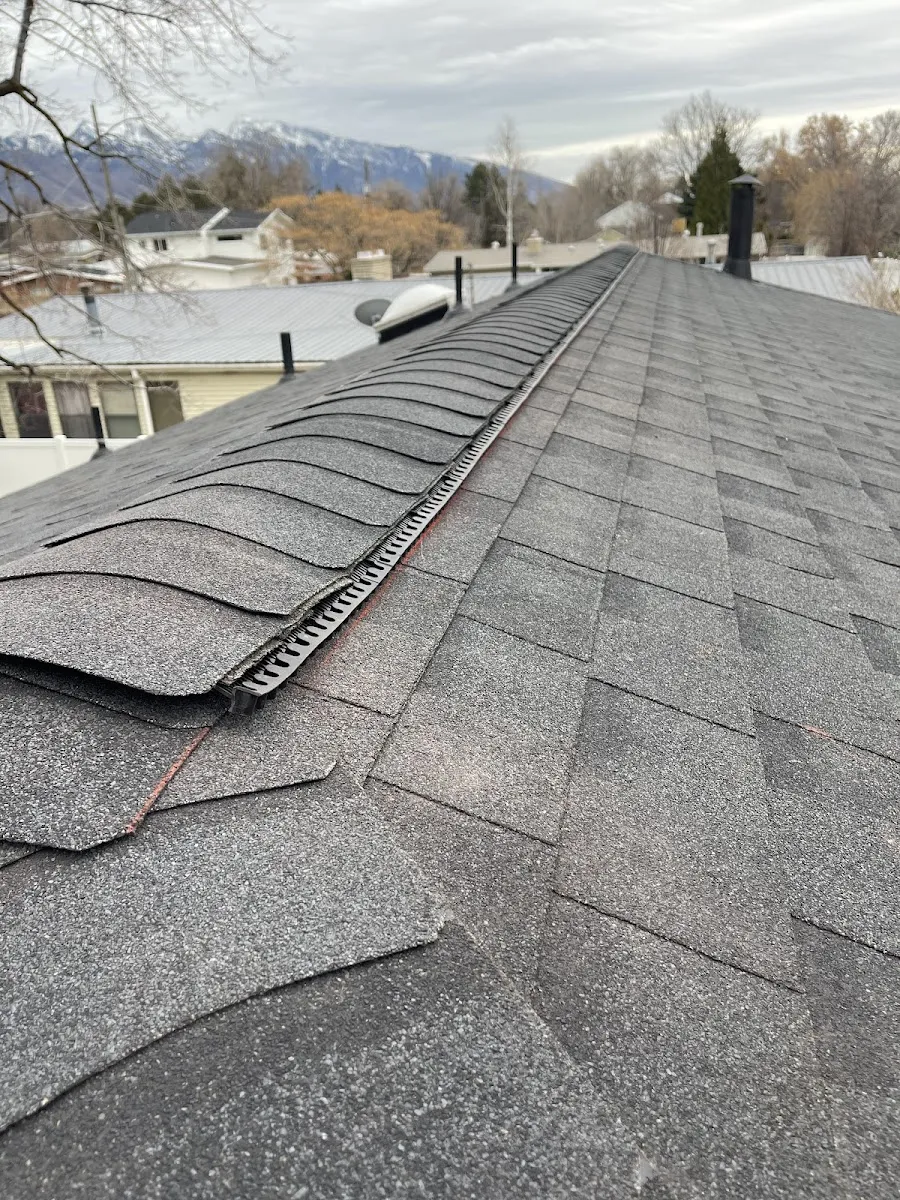
Most Heber City homeowners think about their roof in terms of what's on top — shingles, metal panels, flashing. But the system underneath is what determines whether that roof lasts 15 years or 35. At the center of that system is ventilation, and at 5,600 feet of elevation, ventilation physics work differently than they do in the Salt Lake Valley.
Inadequate roof ventilation is the single most common factor in premature roof failure in mountain homes. It doesn't cause dramatic leaks or sudden collapse. Instead, it works slowly — condensation accumulating night after night, freeze-thaw cycles degrading decking from the inside, ice dams forming where warm air meets cold roof surfaces. By the time the damage becomes visible, it's often extensive and expensive.
The Science Behind Mountain Ventilation
Roof ventilation exists to do two things: remove heat from the attic in summer and remove moisture in winter. Both tasks become more demanding at elevation, and both fail more consequentially when they're undersized.
In summer, Heber City's thinner atmosphere allows 20–25% more solar radiation to reach your roof surface than at sea level. That energy heats the attic rapidly, and without sufficient airflow to carry that heat out, attic temperatures can exceed 150°F. The result is accelerated aging of roof materials from the underside — shingle adhesives soften, underlayment breaks down, and your cooling system works harder than it should.
In winter, the problem reverses. Warm, moist air generated by cooking, showering, and simply breathing rises through ceiling penetrations and insulation gaps into the attic space. When outside temperatures drop to single digits or below zero — which happens regularly in Heber City between December and February — that moisture condenses on the cold underside of your roof deck. If ventilation can't remove it fast enough, it freezes. When it thaws, it saturates your sheathing. Over multiple cycles, OSB panels delaminate, fastener connections weaken, and mold gains a foothold.
How Ice Dams Connect to Ventilation
Ice dams are the most visible symptom of a ventilation problem in mountain homes, and Heber City sees them every winter. Understanding the mechanism helps explain why ventilation — not just ice removal — is the real solution.
Here's what happens: heat escaping through an under-ventilated attic warms the roof deck unevenly. The middle of the roof gets warm enough to melt accumulated snow. That meltwater runs down to the eaves, which remain cold because they extend beyond the heated space of the house. The water refreezes at the eave, building a dam of ice that grows with each melt-freeze cycle.
As the dam grows, it traps standing water on the roof behind it. That water backs up under shingles, past flashing, and into your home. The damage can affect ceilings, walls, insulation, and electrical systems — and it's often not covered by standard homeowner's insurance unless you can demonstrate the failure was sudden rather than gradual.
Proper ventilation breaks this cycle at the source. When attic temperature stays close to outdoor temperature, the roof deck doesn't warm enough to melt snow unevenly. No uneven melting means no meltwater flowing to cold eaves. No meltwater means no ice dams. The physics are straightforward — the execution requires getting the ventilation system right.
Components of a Mountain Ventilation System
Soffit Intake Vents
Fresh, cold air enters the attic system through soffit vents along the eaves. These vents must remain clear of insulation — a common problem in mountain homes where homeowners or contractors add insulation to the attic floor without maintaining airflow channels. Proper installation includes rigid foam baffles that create a clear channel from each soffit vent up along the underside of the roof deck, preventing insulation from blocking the intake.
Baffled Ridge Vents
Standard ridge vents work fine in moderate climates. In Heber City, they create problems. Wind-driven snow enters through the vent opening, depositing moisture directly into the attic during winter storms. Snow accumulation on the roof can cap an unbaffled vent entirely, cutting off exhaust airflow precisely when it's most needed.
Mountain-grade baffled ridge vents include internal deflectors that allow air to pass while blocking snow penetration. External snow guards or elevated profiles prevent snow capping. The cost difference between standard and baffled ridge vents is modest — typically a few hundred dollars on a full reroofing project — but the performance difference in snow country is significant.
Attic Baffles and Airflow Channels
Between the soffit intake and the ridge exhaust, air needs an unobstructed path along the underside of the roof deck. In homes with cathedral ceilings, this means dedicated ventilation channels between every rafter bay. In homes with accessible attic space, baffles at the eaves transition into open attic space where air can move freely to the ridge.
The most common failure point is at the eaves, where insulation meets the roof deck at a low angle. Without baffles, insulation inevitably migrates into this space and chokes off intake airflow. In mountain homes where R-50 or higher insulation is recommended, the volume of insulation makes this problem more likely than in valley homes using R-38.
Ventilation and Your Existing Roof
If your Heber City home has an existing roof with inadequate ventilation, you have options that don't require a full tear-off. Adding soffit vents where none exist, upgrading to baffled ridge vents, and installing rafter baffles in accessible areas can all improve performance without a complete reroofing project.
That said, the most cost-effective time to address ventilation is during a reroofing project. When the deck is exposed, your contractor can assess the full system — intake, exhaust, insulation placement, and air channels — and correct everything as an integrated system rather than piecemeal. This is one of many reasons a complete tear-off is preferred over an overlay in mountain environments.
If you're not planning a reroof soon but suspect ventilation issues, a professional attic inspection can identify specific deficiencies and prioritize the most impactful improvements. In many cases, relatively modest upgrades — clearing blocked soffit vents, adding baffles, upgrading the ridge vent — can meaningfully extend the life of your current roof.
How Frame Roofing Utah Approaches Ventilation in Heber City
Every reroofing project we do in Heber City starts with a ventilation assessment before we discuss materials. We measure actual attic volume, calculate the required net free area for intake and exhaust, evaluate existing insulation placement, and identify any penetrations or bypasses that allow conditioned air into the attic space.
This isn't an upsell — it's building science. A roof installed over an improperly ventilated attic will fail prematurely regardless of how good the shingles or metal panels are. We'd rather address ventilation as part of the project scope than come back to fix preventable damage in five years.
Our mountain ventilation specifications include baffled ridge vents rated for snow country, rigid foam rafter baffles at every intake point, and balanced airflow calculations specific to your home's attic geometry and insulation depth. It's the part of the project nobody sees — and the part that determines how long everything else performs.