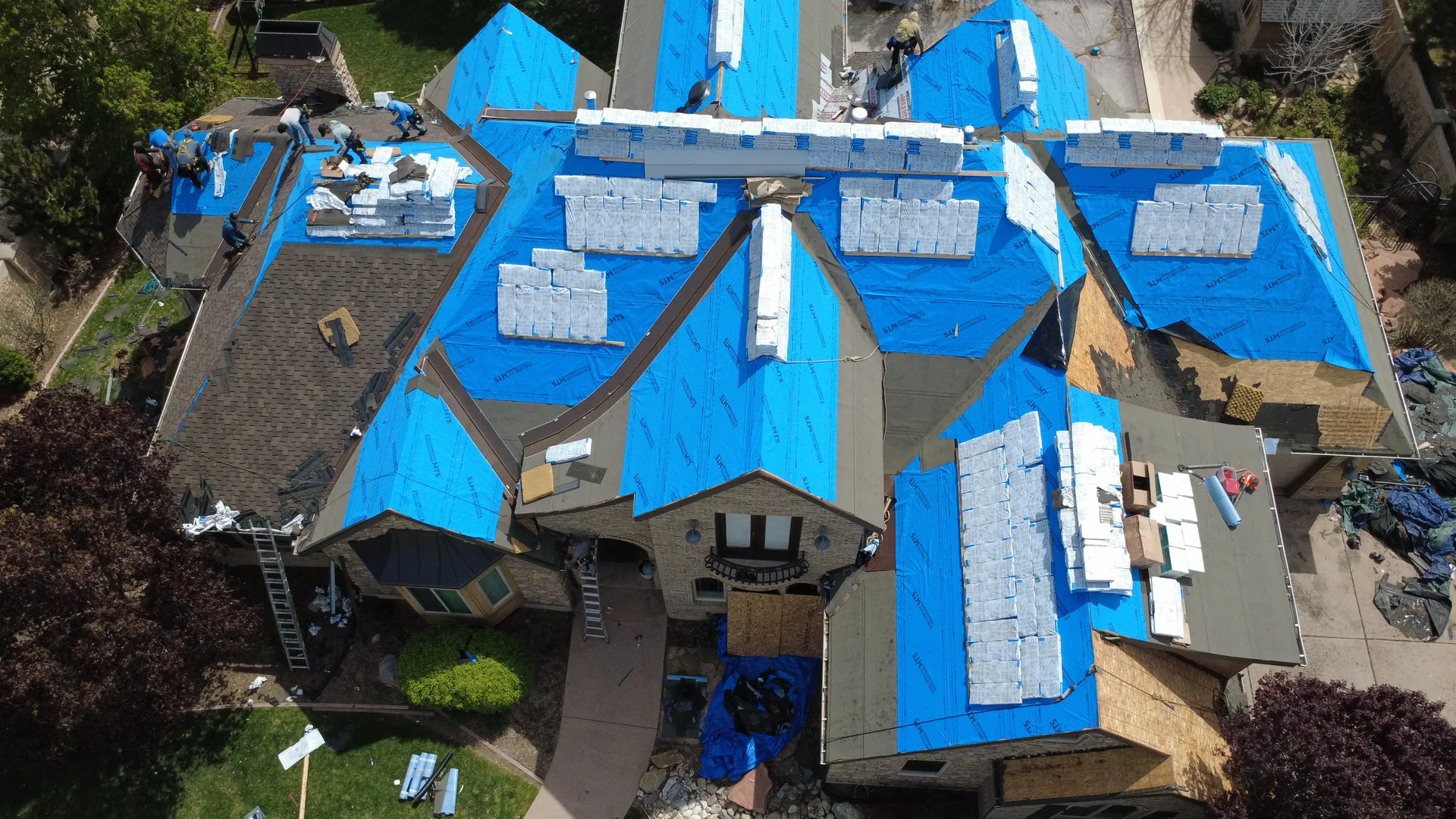
Reroofing is one of the largest investments you'll make in your Heber City home — and at 5,600 feet of elevation, it's one of the most consequential. The roof over your head does more than keep rain out. In Heber Valley, it manages snow loads that can exceed 40 pounds per square foot, withstands UV intensity 20–25% stronger than sea level, and endures temperature swings of 30–40 degrees in a single day. Getting it right matters.
This guide walks you through the entire reroofing process as it applies specifically to mountain homes in the Heber City area — from recognizing the signs that it's time, to selecting the right materials, choosing a qualified contractor, and understanding what the project actually involves.
When Does a Heber City Roof Need Replacing?
Most homeowners assume they'll know when their roof needs replacing. In practice, the signs are often subtle until damage has already reached the deck or interior. Mountain conditions accelerate wear in ways that aren't always visible from the ground.
Age is the starting point. Architectural shingles in the Heber City climate typically perform well for 20–25 years, though cheaper products installed without mountain-grade underlayment may show problems by year 15. Standing seam metal roofing can last 40–60 years with proper installation. If your roof is approaching these thresholds, a professional inspection is worth scheduling regardless of visible condition.
Beyond age, watch for granule loss in your gutters — a sign that shingles are shedding their protective layer and losing UV resistance. Curling or cupping shingles indicate moisture damage from underneath, often caused by inadequate ventilation at elevation. Cracked or missing shingles after winter suggest freeze-thaw cycles have compromised the material. And if you notice dark streaks or moss growth, moisture is getting trapped in places it shouldn't be.
Understanding the Reroofing Process
Reroofing in Heber City isn't the same as reroofing in the Salt Lake Valley. The process requires specific considerations for elevation, snow loads, and thermal cycling that lower-elevation contractors may not account for.
Tear-Off vs. Overlay
In mountain environments, a complete tear-off is almost always the right approach. Overlaying new shingles on old ones might save money upfront, but it prevents inspection of the deck beneath — and in Heber City, that deck is more likely to have moisture damage from condensation, ice dam infiltration, or inadequate ventilation. A tear-off lets your contractor assess and repair the substrate, verify that underlayment is performing, and ensure proper flashing at every penetration point.
Deck Inspection and Repair
Once old materials are removed, the roof deck gets a thorough inspection. In mountain homes, common findings include soft spots from condensation damage (often near ridge vents or bathroom exhaust penetrations), delaminated OSB panels from freeze-thaw cycling, and nail pull-through where heavy snow loads stressed fastener points. Any compromised decking must be replaced before new materials go on — this is structural, not cosmetic.
Underlayment Installation
Underlayment is arguably the most critical layer of a mountain roof, and it's the one most commonly cut short by contractors trying to save time or cost. In Heber City, a self-adhering ice and water shield should extend at minimum 6 feet from every eave — twice what's typically required in the valley. This protects against ice dam infiltration, which is the single most common source of interior water damage in mountain homes.
Material Installation
Whether you choose architectural shingles, standing seam metal, or composite materials, installation technique matters more at elevation. Shingles need hand-sealing in cooler months because the adhesive strips rely on heat to bond — and Heber City nights can drop below activation temperature even in summer. Metal panels require expansion gaps and floating clip systems to handle the thermal movement that comes with 30–40 degree daily swings. Flashing details around chimneys, skylights, and valleys must account for snow creep and ice formation.
Choosing Materials for Heber City's Climate
Material selection at 5,600 feet isn't just about aesthetics or cost. It's about performance under conditions that destroy products designed for lower elevations. The three most reliable categories for Heber City homes each have specific strengths.
Architectural shingles remain the most popular choice, offering the best balance of cost, performance, and curb appeal. For Heber City, look for Class IV impact-rated shingles with SBS-modified asphalt, which stays flexible in freezing temperatures instead of becoming brittle. Products rated for 130+ mph winds handle the gusts that come through the valley during spring and fall storms.
Standing seam metal is the premium performer for mountain homes. Snow sheds cleanly from the interlocking panels, ice dams can't form on a properly installed metal roof, and the material withstands UV degradation for decades. The higher upfront cost is offset by a lifespan two to three times longer than asphalt and virtually zero maintenance. For homes in heavy snowfall zones of the Heber Valley, metal is often the most economical long-term choice.
Composite and synthetic materials offer the look of natural shake or slate without the weight and maintenance issues. These products have improved dramatically in recent years, and the best options now carry Class IV impact ratings with 50-year warranties. They're worth considering for homeowners who want a distinctive look without the fire risk associated with natural wood shake.
How to Choose a Reroofing Contractor in Heber City
The contractor you choose matters as much as the materials they install. Mountain reroofing has specific requirements that separate experienced local professionals from general roofing companies that serve the Wasatch Front and treat Heber City as a side market.
Start with experience at elevation. A contractor who primarily works in the Salt Lake Valley may not account for the ice and water shield extensions, ventilation calculations, or snow load considerations specific to Heber City. Ask specifically about their experience with homes above 5,000 feet and how their approach differs from valley installations.
Verify licensing, insurance, and bonding. Utah requires roofing contractors to carry a general contractor license or specialty license. Workers' compensation coverage is non-negotiable — if an uninsured worker is injured on your roof, the liability falls to you as the property owner.
Request detailed written estimates that specify exact products — manufacturer, product line, and warranty tier — not just generic descriptions like "architectural shingles" or "metal roofing." The difference between a standard 25-year shingle and a Class IV impact-rated 50-year shingle is substantial, and both might be described simply as "architectural shingles" in a vague estimate.
Ask about warranty structure. The best reroofing contractors offer both manufacturer product warranties and their own workmanship warranties. A product warranty means nothing if improper installation caused the failure, and manufacturer warranties typically won't cover installation defects.
What to Expect During the Project
A well-managed reroofing project in Heber City follows a predictable timeline with clear communication at each stage. Knowing what to expect helps you plan around the disruption and identify any red flags.
Before work begins, your contractor should conduct a thorough pre-project walkthrough covering material staging areas, debris containment, landscaping protection, and access routes. In mountain neighborhoods with tighter lot lines, this planning prevents damage to adjacent properties and keeps the work zone organized.
Day one is typically tear-off and deck inspection. This is the noisiest and most disruptive phase, and it's also the most revealing — if hidden damage is found, your contractor should communicate immediately with photos and repair recommendations before proceeding. Expect some flexibility in the schedule here; mountain weather can force pauses that aren't within anyone's control.
Installation proceeds over the following days, with daily cleanup as a baseline expectation. Magnetic sweeps for stray nails should happen at the end of each work day, not just at project completion. Your driveway, walkways, and yard should be clear when the crew leaves each evening.
Final inspection and walkthrough close out the project. This should include a review of all flashing details, ventilation components, and cleanup. You should receive warranty documentation for both materials and workmanship before making final payment.
Ventilation: The Detail Most Roofers Get Wrong at Elevation
Ventilation is the unsexy part of reroofing that has an outsized impact on how long your new roof performs. At Heber City's elevation, the math is different than in the valley, and a contractor who doesn't adjust their ventilation design accordingly is setting your roof up for a shorter lifespan.
The core principle is simple: warm, moist air from your living space rises into the attic. If it can't escape efficiently, it condenses on the underside of the roof deck. In Heber City, where winter temperatures regularly drop below zero, that condensation freezes, thaws, and re-freezes — systematically breaking down your decking, insulation, and underlayment from the inside.
Proper mountain ventilation requires balanced intake at the soffits and exhaust at or near the ridge, sized to move enough air volume for your specific attic space. The 1:150 ratio commonly used in valley construction should be increased to 1:100 or better at Heber City's elevation. Ridge vents should be baffled against snow infiltration — standard ridge vents designed for lower elevations will allow wind-driven snow into your attic during winter storms.
Timing Your Reroofing Project
Heber City's mountain climate creates a defined window for optimal reroofing. Understanding the seasonal trade-offs helps you schedule at the right time and avoid unnecessary complications.
Late spring through early fall — roughly May through October — offers the best conditions. Shingle adhesives need sustained temperatures above 40°F to activate, and summer days provide the warmth and extended daylight that keep projects on schedule. June through September is the peak reroofing season in the Heber Valley, which means booking early matters if you want your preferred contractor.
Early spring and late fall are possible but require a contractor experienced enough to manage temperature-sensitive installations. Hand-sealing shingles, timing work around weather windows, and adjusting material storage for temperature are all manageable for crews that know mountain conditions — but they add time and cost.
Winter reroofing is generally not recommended in Heber City unless it's an emergency repair or a metal roof installation, which is less temperature-dependent than asphalt. If you discover serious damage in winter, a qualified temporary repair can protect your home until conditions allow a full reroof.
Frame Roofing Utah's Approach in Heber City
We built our Heber City practice around one principle: no corners cut. Every reroofing project starts with a detailed assessment that accounts for your home's specific elevation, exposure, pitch, and existing ventilation before we recommend a single product. We don't upsell — we spec what the building science demands for your particular situation.
Our crews understand the difference between valley roofing and mountain roofing because they work at elevation every week, not occasionally. That means proper ice and water shield extensions, baffled ridge vents, hand-sealed shingles when temperatures require it, and ventilation calculations specific to your attic volume and insulation level.
We provide detailed written estimates with exact product specifications, manufacturer warranty documentation, and our own workmanship guarantee. You'll know exactly what's going on your roof, why we chose it, and what happens if something doesn't perform as expected.