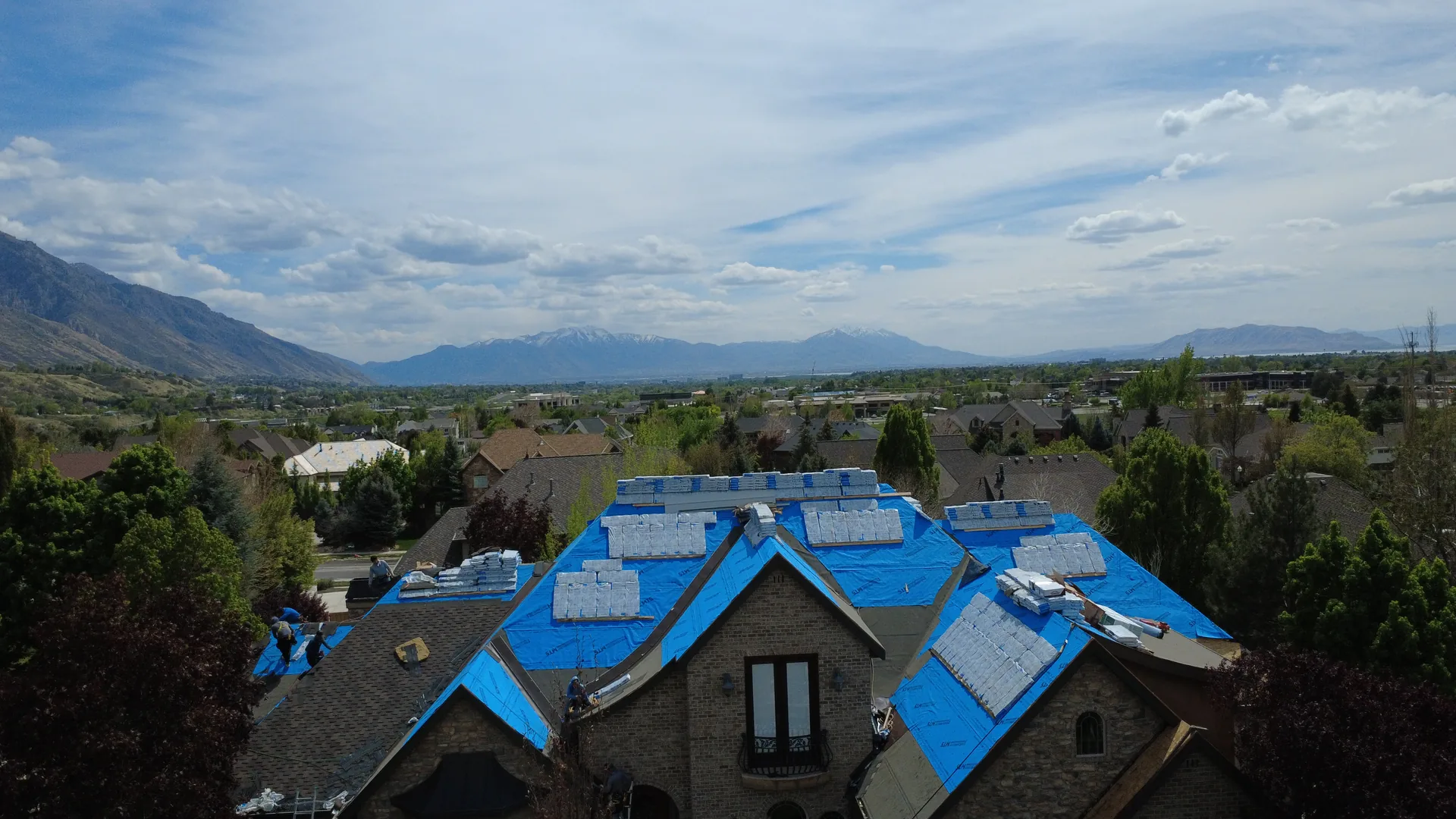
Heber City sits in one of Utah's most beautiful and demanding environments for residential roofing. At 5,600 feet in the Heber Valley, your roof faces conditions that valley homes simply don't encounter — heavier snow loads, more intense UV radiation, wider temperature swings, and the relentless freeze-thaw cycling that defines mountain living along the Wasatch Back. Choosing materials engineered for these conditions isn't an upgrade. It's the baseline for protecting your home.
What Makes Mountain Roofing Different
The difference between a roof that lasts twelve years and one that lasts thirty in Heber City often comes down to material selection and installation quality. Standard products designed for moderate climates face accelerated degradation at elevation, and the consequences show up as premature granule loss, cracked shingles, failed flashings, and ice-related damage that shortens your roof's effective lifespan.
Three factors define Heber City's roofing challenge. First, UV intensity increases roughly four to five percent per thousand feet of elevation. At 5,600 feet, your roof absorbs significantly more ultraviolet radiation than homes in the Salt Lake Valley — and that UV energy is what breaks down the petroleum compounds in asphalt roofing. Second, snow loads in the Heber Valley regularly exceed forty pounds per square foot, placing structural demands on decking, underlayment, and fastening systems that lower-elevation homes rarely face. Third, temperature cycling between day and night can swing thirty to forty degrees, expanding and contracting roofing materials hundreds of times each season.
Materials that handle one of these stresses often can't handle all three simultaneously. That's why Heber City demands products specifically rated for mountain and high-altitude performance.
Architectural Shingles Built for Elevation
The most popular choice for Heber City reroofing projects is Class IV impact-rated architectural shingles manufactured with SBS-modified asphalt. SBS — styrene-butadiene-styrene — is a rubber-like polymer blended into the asphalt that gives shingles dramatically improved flexibility and UV resistance. Where standard oxidized-asphalt shingles become brittle after a few seasons of mountain UV exposure, SBS-modified products maintain their pliability through years of extreme temperature cycling.
For Heber City homes, the specific characteristics that matter most are impact resistance (rated against hail up to two inches), wind resistance (rated for sustained winds of 110+ mph, relevant during Heber Valley downslope events), and granule adhesion (the factor most affected by UV at elevation). Premium manufacturers like CertainTeed, GAF, and Owens Corning all offer product lines with these mountain-specific ratings, though not every product within their catalogs qualifies.
What does "Class IV impact rating" mean for Heber City homeowners?
Class IV is the highest impact resistance rating for roofing shingles, tested by dropping a two-inch steel ball from twenty feet onto the shingle surface without cracking. For Heber City, this matters because hailstorms, falling branches, and ice impact are real risks at elevation. Beyond protection, many insurance carriers offer premium discounts for Class IV roofing — sometimes reducing annual premiums by fifteen to twenty-five percent — making the higher upfront cost partially self-funding over the roof's lifespan.
Standing Seam Metal for Mountain Performance
Metal roofing has become increasingly popular across the Heber Valley, and for good reason. Standing seam metal panels address every mountain challenge simultaneously. The raised seam design allows snow to shed naturally rather than accumulate. The continuous metal surface eliminates the granule-loss problem entirely. And modern metal roofing expands and contracts as a unified system, handling thermal cycling without the incremental degradation that affects shingle tabs.
For Heber City specifically, twenty-six-gauge steel or aluminum panels with Kynar 500 (PVDF) finish coating offer the best combination of longevity and aesthetics. The Kynar finish resists UV fading for decades — a critical factor given Heber's intense solar exposure. Color options have expanded dramatically, allowing metal roofs to complement mountain architectural styles from modern farmhouse to traditional mountain lodge.
The lifespan advantage is significant. Where quality architectural shingles offer thirty to fifty years in Heber City's climate, standing seam metal routinely delivers fifty to seventy years of service with minimal maintenance. The initial investment is higher, but the lifetime cost per year of protection is often lower.
Underlayment: The Hidden Layer That Matters Most
Beneath the visible roofing material, the underlayment system does the real work of protecting your Heber City home from moisture. In mountain environments, this layer matters more than anywhere else because ice dams, wind-driven snow, and condensation all conspire to push moisture past the primary roofing surface.
Ice-and-water shield should extend a minimum of six feet from every eave edge on Heber City homes — exceeding the standard code minimum of two feet that applies to lower-elevation construction. In valleys, around chimneys, at skylights, and along any roof-to-wall transitions, ice-and-water shield creates a self-sealing membrane that prevents moisture penetration even when ice dams form above.
Synthetic underlayment has largely replaced traditional felt paper for Heber City installations. Synthetic products resist tearing during installation on steep pitches, shed water more effectively, and tolerate UV exposure during the construction period without degrading. For mountain roofing where installation may span multiple days due to weather, this UV tolerance prevents the underlayment from becoming a liability before the finished roof is even applied.
Ventilation and Material Performance
Even the finest roofing material will underperform in Heber City without proper attic ventilation. Trapped heat accelerates shingle degradation from below while creating the temperature differentials that drive ice dam formation. The relationship between ventilation and material longevity is direct: a well-ventilated attic can add five to ten years to the effective lifespan of architectural shingles at elevation.
Ridge-and-soffit ventilation systems work best for Heber City's climate, creating continuous airflow that keeps the roof deck temperature close to ambient air temperature. This balanced approach prevents the warm-roof conditions that melt snow unevenly, reduces moisture accumulation in the attic space, and allows roofing materials to perform as their manufacturers intended.
What Quality Installation Looks Like in Heber City
Material selection is only half the equation. In mountain environments, installation quality determines whether premium materials deliver their rated performance or fail prematurely. Several installation practices distinguish mountain-grade workmanship from standard valley techniques.
Fastener patterns and depth must account for snow-load pressure and wind uplift simultaneously. Over-driven nails crack shingles in cold weather; under-driven nails allow wind to lift them. Heber City installation requires calibration specific to the temperature and humidity conditions during installation day.
Flashing details around penetrations, valleys, and transitions require wider overlaps and more generous sealant application than lower-elevation work. Water behavior at elevation — driven by snowmelt, ice pressure, and wind — is more aggressive, and every flashing joint is a potential entry point.
Starter strips and hip-and-ridge caps need matching quality to the field shingles. Using economy-grade starter strips beneath premium field shingles creates a vulnerability at the roof's most exposed edges — exactly where Heber City's wind and snow apply the most force.
How can you tell if a roofer understands mountain installation?
Ask about ice-and-water shield coverage — mountain-experienced roofers will specify six feet or more from eaves, not the code minimum. Ask about ventilation assessment — quality contractors evaluate attic airflow before recommending materials. And ask about warranty terms — manufacturers often require specific installation protocols for mountain environments to honor their full warranty. A roofer who treats Heber City like a valley job likely hasn't worked at elevation long enough to understand the differences.
Frame Roofing Utah's Approach in Heber City
We've built our reputation in the Heber Valley on one principle: no corners cut. Every reroofing project begins with a thorough assessment of your existing roof system — decking condition, ventilation performance, flashing integrity, and structural capacity. This evaluation determines not just what materials to use, but how to install them for maximum longevity in your specific situation.
We work exclusively with mountain-rated products from manufacturers who stand behind their warranties at elevation. Our installation crews are trained in high-altitude techniques, and every project receives a final inspection documenting the complete installation for your records and warranty validation.
Quality mountain-grade reroofing isn't the cheapest option upfront, but it's the most cost-effective decision over the life of your home. In Heber City, the difference between adequate and excellent shows up in how your roof looks, performs, and protects your family ten and twenty years from now.