QUICK ANSWER: Premium roof replacement across the Salt Lake Valley east bench — Cottonwood Heights, Holladay, Mt. Olympus, Sandy east bench, Draper east bench, Millcreek east-of-I-15, and the SLC east-bench corridor (Avenues, Federal Heights, Foothill, Sugarhouse, Yalecrest) — demands more than builder-grade asphalt. Wasatch snowmelt direct-shed, mature tree canopy debris, and afternoon-sun UV at 5,000+ ft elevation typically pull 30 to 50 year-old original roofs and 25-year builder asphalt to end-of-life 2 to 4 years sooner than valley flat-terrain equivalents. 2026 cost ranges run $22K-$30K for Class 4 architectural, $28K-$38K for designer shake, and $45K-$75K for standing-seam metal on a typical 30-40 square home. Frame Roofing Utah covers every premium east-bench ZIP with free written estimates, HOA submittal handling, 10-year workmanship warranty, and BBB A+ accreditation. Call 435-292-8802.
Why the Salt Lake Valley East Bench Is Different
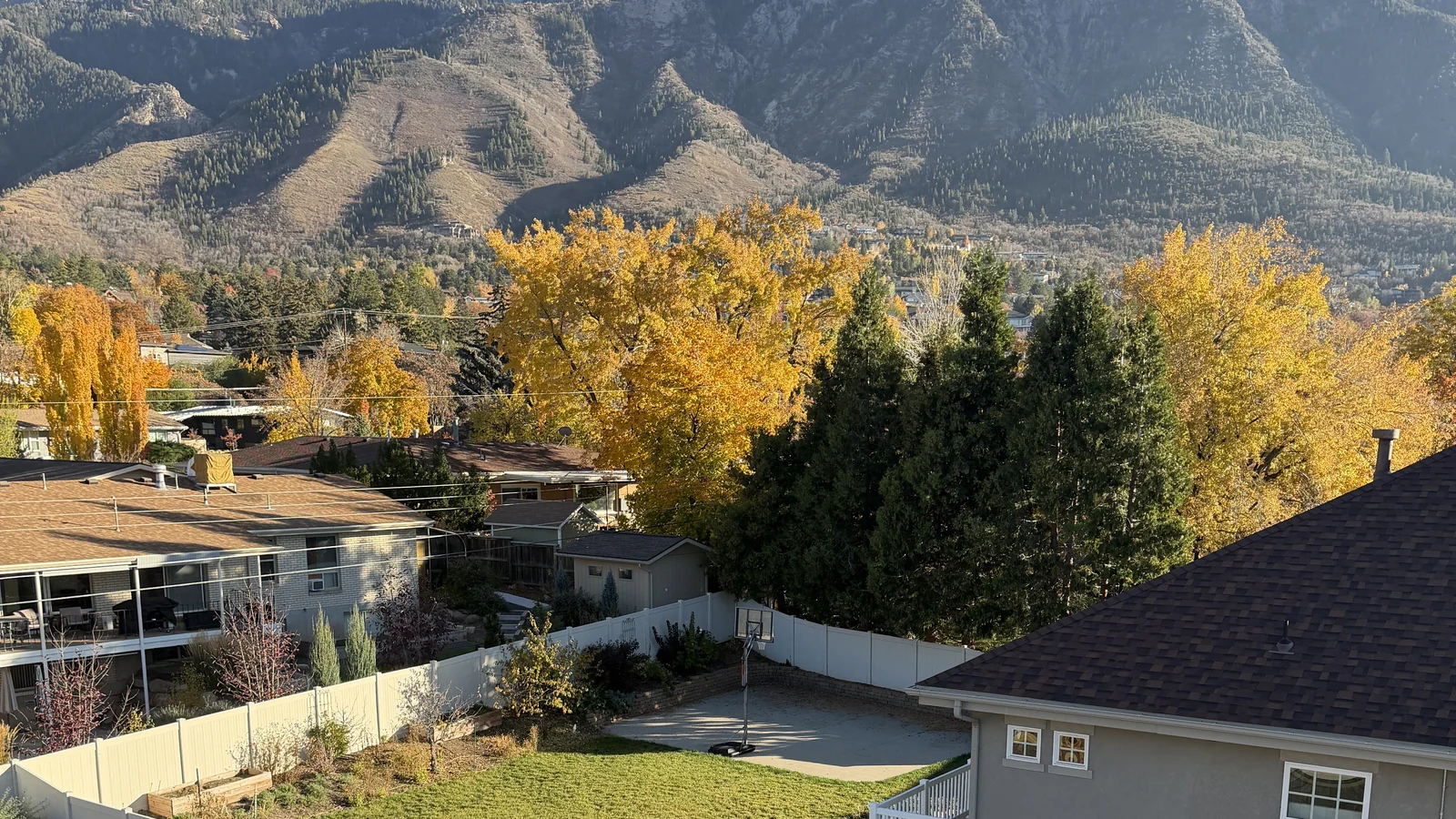
The east bench of the Salt Lake Valley — the band of premium neighborhoods running from the Avenues in the north down through Federal Heights, Yalecrest, Sugarhouse, Mt. Olympus Cove, Cottonwood Heights, Granite, Pepperwood, and SunCrest — sits at the interface between the valley floor and the Wasatch foothills. Most homes are between 4,500 and 5,500 feet elevation, with some Top of the World and SunCrest properties pushing above 5,800. That elevation profile produces a roof-aging environment that differs measurably from the west side of the valley.
Three factors compound. First, snowmelt patterns. The Wasatch foothills shed accumulated snowpack directly onto east-bench roofs through April and May. West-side homes get gradual valley-floor melt that drains into yards and storm systems. East-bench homes get pulses of meltwater sweeping across roof planes, refreezing overnight, and producing ice-dam pressure cycles even on homes with adequate attic insulation. The result is invisible underlayment damage that surfaces 2 to 4 years before the shingle layer itself looks tired.
Second, tree canopy. The premium east-bench neighborhoods were developed between 1900 and 2000 with mature tree plantings — Norway maple, Austrian pine, blue spruce, and various aspen and cottonwood plantings that now produce significant annual debris loads. Needles and leaves collect in roof valleys and gutter approaches, retain moisture against the deck, accelerate underlayment breakdown, and create freeze-thaw expansion pressure under the shingle mat. Established west-side neighborhoods have less canopy because they were generally developed later on more open lots.
Third, UV at altitude. Solar radiation at 5,000 feet runs roughly 8 to 12 percent stronger than valley-floor levels in 84115 or 84119, and south- and west-facing planes on east-bench homes absorb the brunt of it through the afternoon. Granule loss accelerates by roughly 18 to 24 months across a typical 25-year architectural shingle lifecycle. Combine the three factors and a 30-year shingle on a Holladay or Cottonwood Heights east-bench home typically reaches functional end-of-life at 22 to 26 years.
The Premium SLV ZIPs This Guide Covers
The east-bench premium corridor stretches from the SLC north side down to Draper. Frame Roofing Utah serves every ZIP listed below with free on-site inspections.
- Cottonwood Heights (84093, 84121). Top of the World, Bell Canyon, Old Cottonwood, Royal Oaks, Sundance Estates. 4,500-5,800 ft elevation range, direct exposure to Big Cottonwood Canyon outflow gusts.
- Holladay (84117, 84121, 84124). Mt. Olympus Cove, Walker Lane, Knudsen Corner. Mature canopy, premium home stock, established HOA pockets along the foothill.
- Millcreek east-of-I-15 (84106, 84109). East Millcreek, Olympus Cove, Millcreek Canyon approach. Mid-tier premium with strong upgrade potential on 1970s-90s build stock.
- Sandy east bench (84092, 84094). Pepperwood, Granite, Alta foothill, Sandy Heights. Steeper pitches, HOA design covenants, Little Cottonwood Canyon outflow exposure.
- Draper east bench (84020). SunCrest, Bell Canyon, Steep Mountain. Highest elevations in the corridor (5,500-6,500 ft), most aggressive snowmelt patterns, often custom builds with complex roof geometry.
- SLC east bench (84102, 84103, 84105, 84108). Avenues, Federal Heights, Foothill, Sugarhouse, Yalecrest, Harvard-Yale. Historic home stock (1900-1950 common), narrow lots, mature canopy, often with historic-district overlays in the Avenues and Yalecrest.
- Murray east (84107, 84121 overlap). Mid-tier with east-of-State-Street upgrade potential, sharing some Holladay and Millcreek build-era patterns.
Each of these ZIPs has its own neighborhood-specific reroof considerations, which we cover in dedicated guides as we publish them. See the full Cottonwood Heights guide. See the Holladay storm-damage guide.
Material Decision Matrix for Premium SLV Homes
Standard 3-tab asphalt is not appropriate for any premium east-bench home in 2026. The wind-uplift rating (60 mph) is below typical canyon outflow gusts off Big Cottonwood and Little Cottonwood, and the warranty period (15-20 years) is shorter than the practical service life at this elevation. Frame Roofing Utah does not install 3-tab on east-bench properties. The baseline minimum is 30-year architectural asphalt with a 110+ mph wind warranty.
Class 4 impact-resistant architectural asphalt
Class 4 is the right baseline for most east-bench reroofs. The product is rated under the UL 2218 impact test (a 2-inch steel-ball drop without mat cracking), costs roughly 15 to 20 percent more than standard architectural asphalt, and qualifies for an insurance discount with most Utah homeowner carriers — typically 10 to 30 percent off the wind-and-hail portion of premium. Practical lifespan at east-bench elevation runs 28 to 34 years, which is 5 to 10 years longer than standard architectural. Common product lines we install include CertainTeed NorthGate, GAF Timberline AS II, and Owens Corning Duration Storm.
Designer-shake-style architectural (synthetic)
Designer-shake-style products (CertainTeed Grand Manor, GAF Camelot II, F-Wave Reveal, Brava Cedar Shake) deliver the look of cedar shake with the durability and Class A fire rating of asphalt or polymer. The right fit for Mt. Olympus Cove HOA pockets, Top of the World, Pepperwood, and historic-district homes in the Avenues or Yalecrest where original wood-shake replacement is required for character but cedar's 15-year practical life at 5,000+ ft elevation makes natural shake a bad lifecycle bet. Cost runs 60 to 90 percent more than Class 4 architectural for comparable scope.
Standing-seam metal
Standing-seam metal is the right material for the highest-elevation east-bench corridors — SunCrest, Top of the World, Bell Canyon, upper Pepperwood, and the steeper Mt. Olympus Cove pockets. Metal sheds snow more reliably than any shingle product, lasts 50+ years with minor maintenance, and handles 130+ mph wind exposure. Lifecycle math usually favors metal even at 2 to 3 times the upfront cost of architectural asphalt. Color and profile are HOA-controlled in most east-bench review pockets; we coordinate the submittal as part of the project. Cost on a typical 30-square east-bench home runs $45,000 to $75,000.
Synthetic slate and natural slate
Synthetic slate (DaVinci, Brava, F-Wave) and genuine quarried slate are appropriate for high-end Avenues, Federal Heights, and Yalecrest historic homes where the original spec was slate. Synthetic carries the visual and structural benefits at 30 to 50 percent of natural-slate cost, and the structural load profile fits homes with 1900-1940 sheathing without reinforcement. Genuine slate requires a structural review of the existing deck and rafters before scope-lock. Cost on a typical historic-district reroof: synthetic slate $35,000 to $55,000, genuine slate $65,000 to $120,000+.
See full reroof material specs and pricing across all premium tiers.
Snowmelt + Tree-Debris: The Hidden Killers of East-Bench Roofs
Two failure modes account for most premature east-bench reroof decisions, and both are invisible from a ground inspection. The first is ice-dam-driven underlayment damage. Wasatch snowmelt comes off the foothills in pulses through April. Meltwater sweeps across roof planes during the day, refreezes overnight at the eave, and produces backed-up water that finds any micro-gap in the underlayment. Two or three winter seasons of this and the underlayment layer is compromised even though the shingle layer above looks intact from the street.
The fix is engineering, not patching. Standard Utah residential code (IRC R905.1.2) requires only 36 inches of ice-and-water shield past the exterior wall line. At east-bench elevation Frame Roofing Utah installs full-deck ice-and-water shield (or peel-and-stick high-temp membrane in metal scopes) as standard practice on every reroof above 4,800 ft. We also re-spec heat-tape zones at eave returns and complex valley intersections where ice-dam pressure historically concentrates on the specific home's geometry.
The second failure mode is tree-debris-driven valley and gutter rot. Holladay, Avenues, Federal Heights, Old Cottonwood, and Yalecrest all have mature canopy that drops 6 to 12 cubic feet of needle and leaf debris per roof per year. The debris collects in valleys, packs against the gutter apron, and retains moisture against the underlayment. After 5 to 8 years of unaddressed debris load, the underlayment in those zones breaks down even though the shingle layer is fine. Ground inspections miss this because the visible shingle still looks current.
The fix is a combined gutter, valley-flashing, and ice-and-water-shield upgrade. We install gutter guards (micro-mesh or solid-cover depending on canopy type) on every east-bench reroof in canopy-heavy neighborhoods, extend ice-and-water shield 24 inches up each valley, and replace any valley flashing showing more than 8 percent surface degradation.
2026 Cost Ranges Across the Premium SLV ZIPs
Cost varies more in the east-bench than across west-side valley ZIPs because of three compounding factors: roof complexity (steeper pitches and multi-gable rooflines), material upgrade rates (Class 4 and metal are common east-bench specs), and HOA-driven material requirements. Ranges below are for a typical 30 to 40 square home in 2026 dollars, full tear-off, full-deck ice-and-water shield, synthetic underlayment, complete flashing replacement, ridge venting, and pipe-boot replacement.
- Class 4 impact-resistant architectural asphalt: $22,000 to $30,000. Right baseline for Old Cottonwood, Royal Oaks, Sugarhouse, Murray east, most of Millcreek, and lower-elevation Holladay.
- Designer architectural shake (synthetic): $28,000 to $38,000. Right fit for Mt. Olympus Cove, parts of Federal Heights and Yalecrest, and Pepperwood HOA pockets where shake aesthetics are required.
- Synthetic slate: $35,000 to $55,000. Right fit for Avenues, Federal Heights, Yalecrest historic homes where original spec was slate or where the historic-district overlay requires a slate look.
- Standing-seam metal: $45,000 to $75,000. Right fit for Top of the World, Bell Canyon, SunCrest, upper Pepperwood, and the steepest Mt. Olympus Cove pockets. Lifecycle math favors metal at 50+ year practical life.
- Genuine cedar shake or natural slate: $65,000+. Specialty scope for specific historic-district restorations and high-end custom builds.
Two real factors push east-bench numbers above the west-side equivalent: full-deck ice-and-water shield is standard at 4,800+ ft elevation (vs 36-inch valley minimum), and steeper Top of the World, Bell Canyon, SunCrest, and Pepperwood pitches require additional safety equipment and labor hours. We provide written, line-item estimates after an on-site inspection — no high-pressure same-day-close pricing tactics, which is one of the easiest ways to identify and avoid out-of-state storm-chaser contractors who descend on the east bench after wind or hail events.
Financing is available for qualified homeowners through standard third-party lenders, and we work with all major Utah homeowner-insurance carriers when storm damage justifies a claim-funded replacement. See our insurance-claim process for storm-funded reroofs.
HOA + Permit Realities Across the Premium SLV Corridor
Several east-bench neighborhoods maintain active architectural review boards that scrutinize material changes during reroof. Like-for-like (asphalt to asphalt, same color and profile) typically clears administratively in 3 to 5 business days. Visible upgrades — color shifts, profile changes, switch from asphalt to metal or designer shake — need design-review submittal and 1 to 3 weeks for approval. The corridors that maintain active review:
- Top of the World, Bell Canyon, Sundance Estates (Cottonwood Heights)
- Mt. Olympus Cove and parts of Walker Lane (Holladay)
- Pepperwood, Granite, and parts of Alta foothill (Sandy east bench)
- SunCrest (Draper east bench)
- Parts of Federal Heights and Yalecrest (SLC east bench — historic district overlay rather than HOA)
Frame Roofing Utah handles HOA architectural review submittals as part of every project scope in these neighborhoods. Homeowners do not need to manage the design-review correspondence directly. Where a historic-district overlay applies (parts of the Avenues and Yalecrest), we work with the SLC Historic Landmark Commission process and ensure the spec meets the overlay requirements before scope lock.
Building permits process through the city or county of the property: Salt Lake County for unincorporated Millcreek and parts of east Murray, the city of Cottonwood Heights, Holladay, Sandy, Draper, or Salt Lake City for the relevant properties. Standard turnaround is 5 to 10 business days. We pull and manage every permit as part of the project scope.
The Frame Roofing Utah Premium SLV Process
Every reroof starts with a free, no-obligation on-site inspection. Our crew documents the existing roof condition with annotated photos, measures every plane, identifies decking issues that may need replacement, and provides a written line-item estimate within 24 to 48 hours. We work to current International Residential Code (IRC R905) standards and Utah DOPL contractor licensing requirements (Utah DOPL License #14256097-5501). Every reroof includes our 10-year workmanship warranty plus the manufacturer's material warranty (30 to 50 years on architectural asphalt, 50+ years on standing-seam metal).
On install day we tear off to the deck, inspect every sheet for rot or delamination and replace as needed (most first-cycle east-bench reroofs need 2 to 6 sheets), install full-deck ice-and-water shield, install synthetic underlayment, install drip edge and starter strip, install the finished roofing material, install ridge venting and ridge cap, and replace all pipe boots and step flashing. A standard 30-square Class 4 architectural reroof completes in 1 to 2 days. Designer-shake or standing-seam metal reroofs run 4 to 7 days due to material complexity and steeper pitch handling.
Throughout the project we coordinate with your HOA architectural review board (where applicable), the relevant city or county building department on permits, and your insurance adjuster if the reroof is claim-funded. Homeowners do not need to manage any of this directly. We also schedule around east-bench weather windows so a tear-off does not start the day before the next 70 mph canyon outflow comes off the Wasatch — that scheduling discipline is one of the differences between a local Utah contractor and an out-of-state storm chaser. Verify our Utah DOPL license and BBB A+ accreditation.
When to Replace vs Repair Across the East Bench
The replace-vs-repair decision tilts toward replacement faster on east-bench homes than on valley equivalents because the elevation accelerates wear on surrounding components, not just the shingles. A 22-year-old asphalt roof in Cottonwood Heights or Holladay has aged seal strips, brittle ridge cap, sun-cooked underlayment in unventilated attic zones, debris-rot in valleys, and 15-to-20-year-old pipe boots all approaching simultaneous failure. Patching a missing-shingle cluster on a roof at this stage typically buys 12 to 24 months at most before the next failure point opens up.
Repair makes sense on east-bench roofs under 15 years old with localized damage — one missing shingle from a wind event, a single failed pipe boot, an isolated flashing leak around a chimney or skylight. Above 18 years and especially above 22 years, the math usually favors replacement on east-bench homes. See our roof-repair scope and pricing. We provide a written replace-vs-repair recommendation as part of every free inspection, with photo documentation showing the specific failure modes present on your roof.
Frequently Asked Questions
Which Salt Lake Valley ZIPs need premium roof materials in 2026?
The east-bench premium corridor stretches across 84093 and 84121 (Cottonwood Heights), 84117/84121/84124 (Holladay), 84106 and 84109 (Millcreek east of I-15), 84092 and 84094 (Sandy east bench — Pepperwood, Granite, Alta foothill), 84020 (Draper east bench — SunCrest, Bell Canyon), and the SLC east-bench ZIPs 84102/84103/84105/84108 (Avenues, Federal Heights, Foothill, Sugarhouse, Yalecrest). These ZIPs share Wasatch snowmelt direct-shed, mature tree canopy debris, and premium home values that justify Class 4 architectural, standing-seam metal, or designer-shake material upgrades over builder-grade asphalt.
Why do east-bench Salt Lake Valley roofs fail faster than west-side roofs?
Three real factors. First, the Wasatch foothills shed snowmelt directly onto east-bench roofs through April and May rather than absorbing it gradually like west-side flat terrain — that produces ice-dam pressure cycles even on homes with adequate attic insulation. Second, mature tree canopy in established east-bench neighborhoods drops needle and leaf debris into valleys and gutters faster than open west-side lots, retaining moisture against the deck and underlayment. Third, afternoon-sun UV at 5,000+ feet elevation on south and west planes accelerates granule loss by roughly 18 to 24 months compared to lower-valley equivalents.
How much does a premium Salt Lake Valley reroof actually cost in 2026?
For a typical 30 to 40 square east-bench home: Class 4 impact-resistant architectural asphalt runs roughly $22,000 to $30,000; designer architectural shake (synthetic) runs $28,000 to $38,000; standing-seam metal runs $45,000 to $75,000; natural slate or genuine cedar shake runs $65,000+. These are full tear-off scopes with full-deck ice-and-water shield, synthetic underlayment, complete flashing replacement, ridge venting, and pipe-boot replacement. Pricing varies with neighborhood pitch complexity, HOA material requirements, and decking condition.
Do Salt Lake Valley premium-ZIP homes need HOA architectural review for a reroof?
Yes in several specific corridors. Top of the World and Bell Canyon (Cottonwood Heights), the Mt. Olympus Cove HOA pockets (Holladay), Pepperwood and Granite (Sandy east bench), SunCrest (Draper east bench), and parts of Federal Heights all maintain architectural review boards. Like-for-like material replacements typically clear administratively in 3 to 5 business days. Visible upgrades — color shifts, profile changes, switch from asphalt to metal or designer shake — need design-review submittal and 1 to 3 weeks for approval. Frame Roofing Utah handles HOA submittals as part of the project scope.
How long does a Salt Lake Valley premium roof replacement take from estimate to final inspection?
From the free on-site inspection to final inspection sign-off, plan for 3 to 6 weeks total for Class 4 architectural asphalt jobs and 5 to 9 weeks for standing-seam metal or designer-shake jobs. The breakdown: 24 to 48 hours for written estimate after inspection, 5 to 10 business days for the SLC, Cottonwood Heights, Holladay, or Sandy building department permit, 1 to 3 weeks for HOA architectural review when required, 1 to 2 days install for asphalt or 4 to 7 days for specialty materials, and 3 to 5 business days for the final municipal inspection.
Sources & References
- Salt Lake City Historic Landmark Commission
- Cottonwood Heights City — Building Department
- International Residential Code R905
- UL 2218 Impact Resistance Standard
- Utah Division of Professional Licensing (DOPL)
- National Weather Service — Salt Lake City
Frame Roofing Utah serves the entire Salt Lake Valley east-bench premium corridor — Cottonwood Heights, Holladay, Mt. Olympus, Millcreek, Sandy east bench, Draper east bench, SLC east bench — with free on-site inspections and written line-item estimates. Call 435-292-8802 or schedule online. Every reroof is backed by our 10-year workmanship warranty.