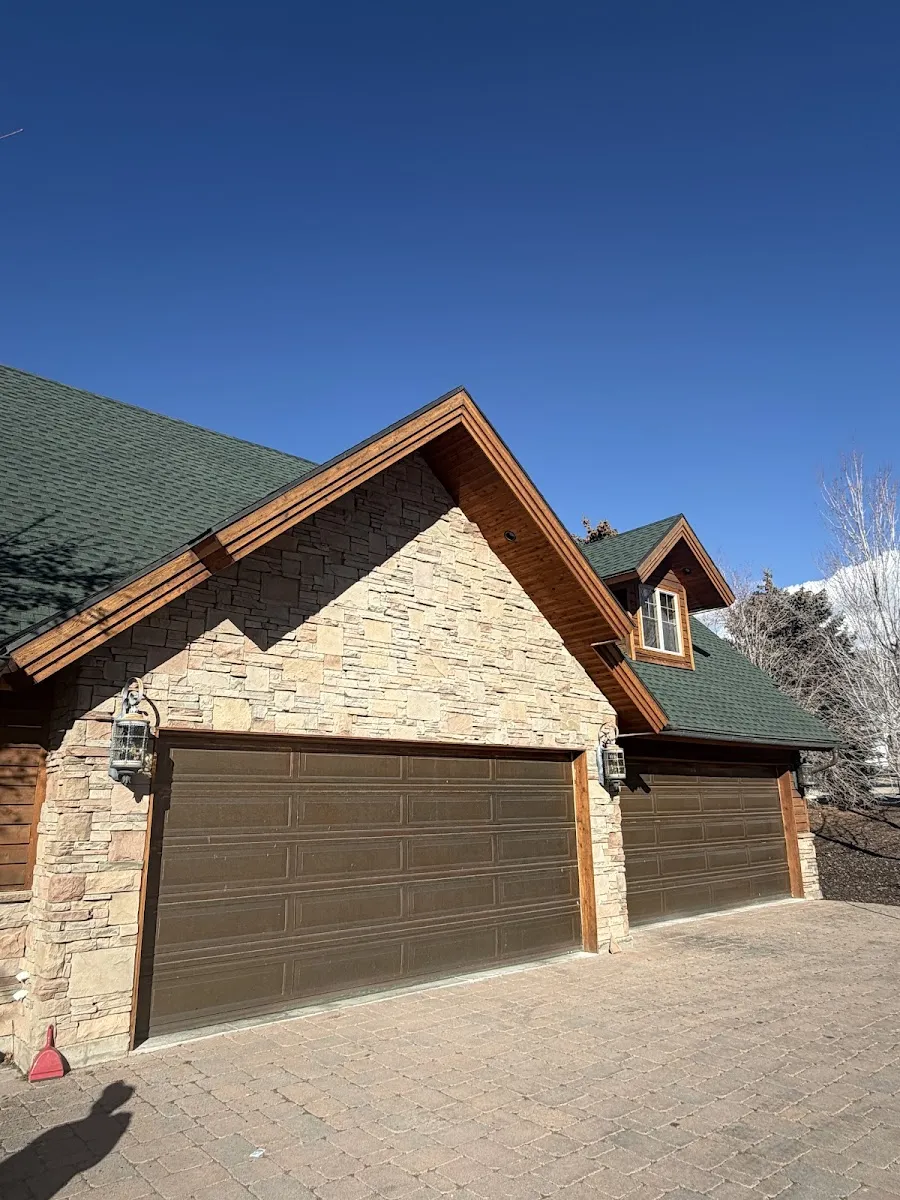
Natural cedar shake has defined mountain architecture for generations. The warmth of hand-split wood, the dimensional shadow lines, the way a cedar roof settles into its surroundings like it's always belonged there — these are qualities that draw Park City homeowners to the material instinctively. But at 7,000 feet, natural cedar tells a different story. UV intensity accelerates surface degradation. Freeze-thaw cycling splits and cups individual shakes. Moisture retention invites moss, mildew, and premature rot. A cedar roof that might last thirty years at sea level often requires replacement in fifteen to twenty at elevation.
Designer shake-style shingles deliver the aesthetic warmth Park City homeowners want while eliminating every weakness that makes natural cedar problematic in mountain climates. Today's premium composites and architectural laminates have advanced to the point where visual distinction from natural wood is virtually impossible at street level — and performance at elevation isn't even comparable. It's not a compromise. It's an upgrade in every dimension that matters.
Why Natural Cedar Struggles at Elevation
Understanding why designer alternatives outperform requires understanding what elevation does to natural wood. Park City's climate subjects roofing materials to conditions that accelerate deterioration through multiple simultaneous mechanisms.
UV radiation at 7,000 feet is roughly 25 percent more intense than at the Wasatch Front. This breaks down cedar's natural lignin — the structural polymer that gives wood its rigidity and weather resistance. Without regular treatment, cedar shake surfaces begin graying and checking within three to five years. The protective oils that manufacturers apply at the factory don't last long under mountain-intensity UV.
Moisture cycling compounds the problem. Cedar absorbs and releases water with every weather change, and Park City's rapid temperature swings mean that cycling happens constantly. Shakes that absorb afternoon snowmelt freeze overnight, expand, contract, and gradually develop the cupping and splitting that lets water penetrate deeper into the wood. Each cycle weakens the material further.
Fire risk adds another dimension entirely. Natural cedar carries a Class C fire rating at best, and many insurance carriers have increased premiums or restricted coverage for wood-roofed homes in wildland-urban interface zones around Park City. Designer composites typically carry Class A fire ratings — the highest available — which can actually reduce insurance costs.
What Makes Designer Shake Different
The term "designer shake-style shingles" encompasses several product categories, and the differences matter. Premium options from manufacturers like CertainTeed Grand Manor, GAF Camelot, and DaVinci Roofscapes use fundamentally different approaches to achieve the shake aesthetic, and each has characteristics that suit different architectural contexts in Park City.
Architectural Laminate Shingles
The highest-end asphalt-based options use multi-layered laminate construction to create dimensional profiles that mimic hand-split cedar. CertainTeed's Grand Manor and GAF's Camelot series use triple-laminate designs with shadow bands and irregular butt edges that produce the deep, textured appearance of thick-cut cedar. These shingles typically carry 50-year limited lifetime warranties with wind ratings of 130 mph or higher — specifications that natural cedar can't approach.
At Park City elevation, the key advantage of premium architectural laminates is their SBS-modified asphalt formulation. The polymer modification gives the shingle flexibility even in extreme cold, preventing the brittle cracking that standard shingles develop during mountain winters. This isn't a feature you'll find in mid-range products — it's what separates a luxury-grade installation from a standard one.
Composite Polymer Shingles
DaVinci Roofscapes and similar manufacturers produce composite shingles using engineered polymer resins molded from actual cedar shake masters. These products achieve the most realistic wood appearance of any synthetic option — the grain detail, color variation, and dimensional irregularity are sculpted from real hand-split shake specimens. From fifteen feet away, even experienced roofers have difficulty distinguishing them from natural cedar.
Composite polymer shingles carry the strongest warranty profiles in the industry, with 50-year limited lifetime coverage being standard. They're completely impervious to moisture — they won't absorb water, won't support biological growth, and won't deteriorate from freeze-thaw cycling. For Park City homes where the aesthetic of natural wood is non-negotiable but the performance of natural wood isn't acceptable, composites represent the bespoke solution.
In roofing terminology, "architectural" refers to any multi-layer laminate shingle — the standard upgrade from three-tab. "Designer" refers to the premium tier above architectural: thicker profiles, more dimensional variation, specialized color blending, and the highest performance ratings the manufacturer offers. For Park City luxury homes, this distinction matters. Standard architectural shingles look flat and uniform compared to designer profiles that replicate the depth and character of natural materials. The cost difference is typically 30 to 40 percent — a worthwhile investment for homes where aesthetic precision matters.
Architectural Integration for Park City Homes
Park City's architectural landscape spans mountain modern, rustic-luxury, traditional alpine, and everything between. The right shake-style shingle needs to integrate with the specific design language of each home — this isn't a one-product-fits-all decision.
Rustic-Luxury and Traditional Mountain
Homes with exposed timber elements, stone facades, and traditional mountain proportions benefit from the deepest-profile designer shakes. Multi-tonal color blending in warm cedar tones — with variation from honey blonde through weathered gray-brown — creates the established, time-settled appearance these architectural styles demand. DaVinci's multi-width Bellaforté shake or CertainTeed's Grand Manor with custom color blending deliver the dimensional authenticity these homes require.
Mountain Modern and Contemporary
Clean-lined contemporary homes present different requirements. Here, the shake profile needs to be more uniform — controlled randomness rather than wild variation. Darker, more uniform color blends in charcoal, slate, or deep umber create contrast against glass and metal elements while maintaining the natural warmth that connects the home to its mountain setting. GAF's Camelot II in dark colorways or DaVinci in single-width configurations with minimal color variation achieve this refined look.
Multi-Material Rooflines
Many of Park City's finest homes use multiple roofing materials across different planes — standing seam metal on primary roof faces with shake-style shingles on dormers, accent gables, or lower-slope secondary roofs. This layered approach creates visual depth and architectural interest. When combining materials, the shake-style shingle selection needs to complement the metal color and profile rather than compete with it. We frequently coordinate material and color selection across both products to ensure the finished roofline reads as a cohesive, intentional design.
The vast majority of Park City HOAs and architectural review committees approve premium designer shake shingles. Many have specifically updated their approved materials lists to include high-end composites and architectural laminates because they meet the aesthetic standard the community requires while eliminating fire risk and maintenance concerns. Some communities now prefer or require non-combustible alternatives to natural wood. We recommend submitting material samples and manufacturer specifications to your HOA's architectural review committee before finalizing your selection — a step we handle as part of every Park City project.
Performance at 7,000 Feet
The performance gap between natural cedar and designer alternatives widens with elevation. Every environmental factor that challenges roofing materials is amplified at Park City's altitude, and designer shingles are engineered to address each one specifically.
Wind Resistance
Park City experiences regular wind events that exceed 60 mph, with canyon-effect gusts reaching substantially higher. Natural cedar shake relies on individual nail attachment with no interlocking mechanism — each shake is essentially an independent element. Designer shingles use adhesive sealant strips and interlocking tab designs that create a unified roof surface. Premium products carry wind ratings of 130 to 150 mph, which provides meaningful safety margin even during Park City's most severe weather events.
Impact Resistance
Hail is an annual reality in the Wasatch Mountains. Many designer shake-style shingles carry Class 4 impact ratings — the highest available — meaning they're tested to withstand two-inch steel ball impacts without fracturing. Natural cedar offers no standardized impact rating, and older cedar roofs are particularly vulnerable to hail damage because UV degradation has already compromised the wood's structural integrity.
Snow and Ice Performance
Park City's snow loads are substantial and sustained. Designer shingles provide a smoother, more consistent surface than natural cedar, which means snow sheds more predictably rather than catching on irregular, cupped, or split shakes. When paired with proper underlayment and ice-and-water shield at eaves, designer shake roofs manage snowmelt without the water infiltration issues that plague aging cedar installations.
Cost and Long-Term Value
Premium designer shake-style shingles cost more than standard architectural shingles but represent significant value compared to natural cedar when evaluated over the roof's full lifecycle.
Initial installed cost for designer shake products on a Park City luxury home typically ranges from $18,000 to $45,000 depending on home size, roof complexity, and specific product selection. Natural cedar shake installation runs comparable or higher — $20,000 to $50,000 — because the material cost and installation labor requirements for genuine wood are substantial.
Where the value equation tips decisively is in maintenance and longevity. Natural cedar at Park City elevation requires treatment or retreatment every three to five years — typically $3,000 to $6,000 per cycle — and full replacement in fifteen to twenty years. Designer shake-style shingles require no maintenance beyond standard inspection and carry warranties of thirty to fifty years. Over a thirty-year horizon, the total cost of ownership for designer shake is typically 40 to 60 percent less than natural cedar.
Insurance savings add further value. The Class A fire rating and Class 4 impact rating that many designer products carry can reduce homeowner's insurance premiums meaningfully — savings that compound year over year throughout the roof's life.
The Installation Difference
Designer shake-style shingles demand installation precision that matches their premium engineering. At Park City elevation, proper installation isn't just about manufacturer specifications — it's about understanding how mountain conditions interact with material behavior and building science.
Underlayment selection at elevation requires more than code minimum. We specify synthetic underlayment with ice-and-water shield extending a minimum of six feet from all eaves, valleys, and sidewall intersections — well beyond the three-foot minimum that satisfies building code. In Park City's snow environment, this additional coverage prevents the water infiltration that occurs when ice dams form at transitions.
Ventilation integration is equally critical. Designer shingles perform to their rated lifespan only when the attic environment beneath them functions properly. We verify that intake and exhaust ventilation meet the 1:150 ratio before any roofing material goes down, and we address deficiencies before installation rather than hoping they won't matter.
Flashing details around dormers, skylights, chimneys, and wall intersections require exacting execution on any premium roof. With designer shake profiles, the dimensional thickness of the shingle changes how flashing integrates compared to standard products. Installers who treat designer shake like standard architectural shingles create vulnerabilities at every transition point — vulnerabilities that may not manifest for years but eventually lead to exactly the kind of water damage a premium roof should prevent.
Frame Roofing Utah's Approach
We approach every Park City shake-style installation as bespoke work — custom to the home's architecture, elevation exposure, and the homeowner's vision for how the finished roof integrates with the property's design language.
Material selection begins with understanding the home, not the product catalog. We evaluate architectural style, existing material palettes, HOA requirements, slope configurations, and exposure patterns before recommending specific products and color blends. Every Park City home presents unique conditions, and the right solution for a south-facing contemporary at Deer Valley differs from what a north-facing traditional in Old Town requires.
Our installation standards reflect what mountain elevation demands: extended ice-and-water shield coverage, verified ventilation systems, manufacturer-specified fastening patterns, and transition detailing that accounts for thermal movement and snow loading. We don't install to minimum code — we install to the standard that luxury mountain homes deserve.
The result is a roof that delivers the warmth and character of natural shake without any of its compromises. Exquisite artistry in material and execution, built to perform for decades at elevation.