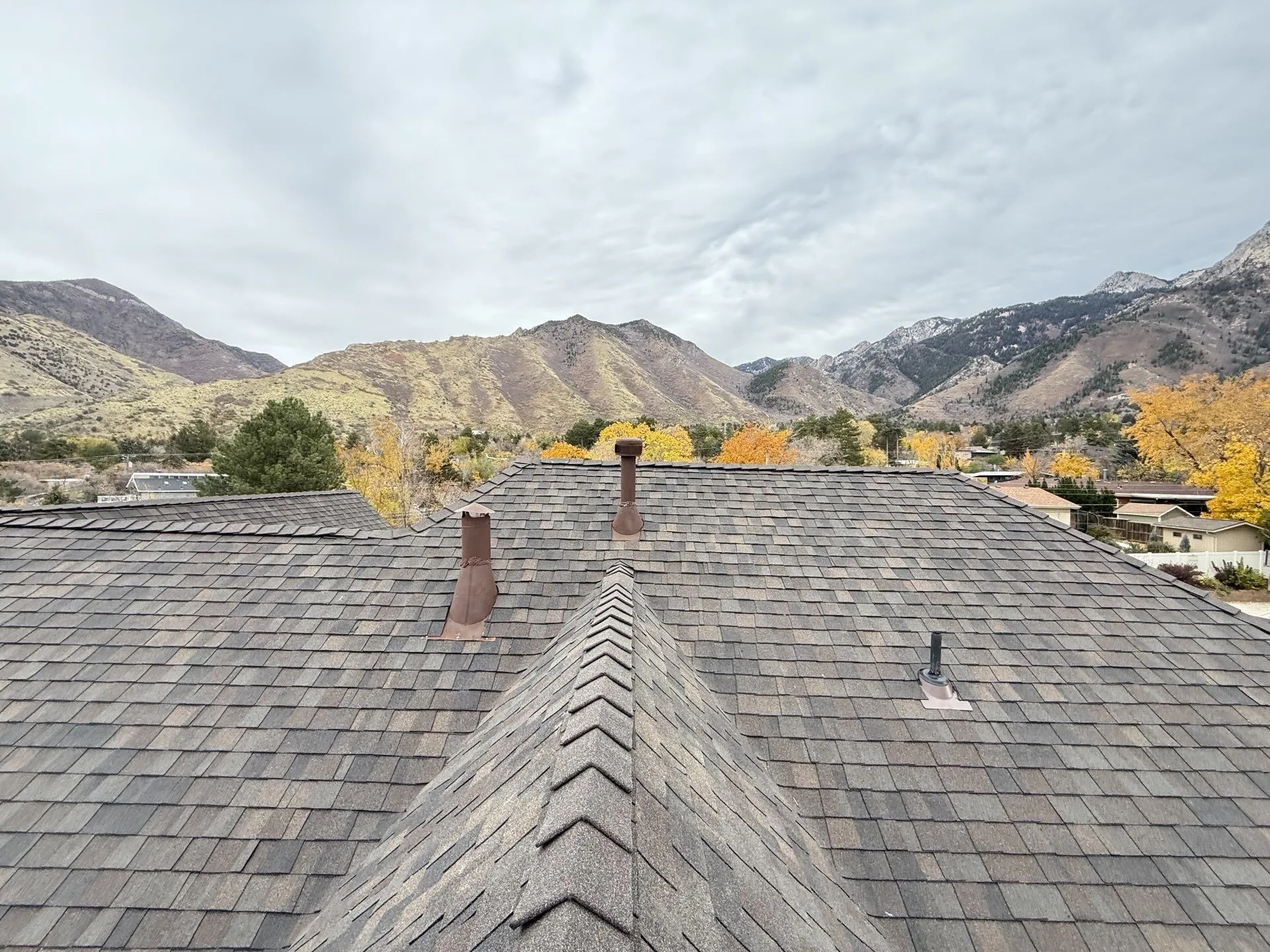
Utah’s climate puts extraordinary stress on roofs. Between heavy mountain snow loads, spring hailstorms along the Wasatch Front, intense summer UV radiation, and dramatic freeze-thaw cycling that can swing 40 degrees in a single day, a Utah roof takes more punishment than roofs in most other states.
The difference between a roof that lasts its full lifespan and one that fails prematurely almost always comes down to maintenance. Here’s what to do each season to protect your investment.
Spring: Post-Winter Damage Assessment
This is the most critical inspection of the year. Utah winters are hard on roofs, and spring is when you discover what the snow, ice, and freeze-thaw cycling did over the past five months.
Check gutters and downspouts: Clear debris from fall and winter. Look for gutters that have pulled away from the fascia — ice accumulation is heavy and often bends or detaches gutter sections. Ensure downspouts direct water at least 4 feet away from the foundation.
Inspect from the ground: Look for missing, curled, or cracked shingles. Check ridge caps and hip shingles for lifting. Look for dark streaks that indicate algae growth (common on north-facing slopes in the Salt Lake Valley).
Check the attic: Look for water stains, daylight penetration, and signs of ice dam damage around the eaves. Check ventilation — blocked soffit vents from insulation settling are a common issue after winter.
Schedule a professional inspection: A licensed contractor should walk the roof to check flashing, pipe boots, valley integrity, and shingle condition. This is especially important after a winter with heavy snow or ice dam activity.
Summer: UV and Storm Season Preparation
Utah summers bring two primary threats: intense UV radiation that degrades roofing materials and severe thunderstorms that bring hail and high winds, primarily from May through August.
Trim overhanging branches: Cut back any tree limbs within 6 feet of the roof. Branches that scrape the roof surface in wind strip away protective granules and create entry points for moisture.
Check attic ventilation: Proper ventilation keeps attic temperatures down, which reduces thermal stress on shingles. In Utah’s summer heat, a poorly ventilated attic can reach 150°F+, dramatically shortening shingle life. Ensure ridge vents and soffit vents are clear and functioning.
After any hailstorm: Inspect soft metals (gutters, mailbox, AC unit) for dent marks. If soft metals show impacts, your roof likely sustained damage. Read our complete Utah hail season guide for detailed damage identification steps.
Fall: Winter Preparation
Fall maintenance is about preparing your roof to survive Utah’s winter. This is especially critical for mountain homes in Park City, Heber City, and communities above 5,000 feet.
Clean gutters thoroughly: This is non-negotiable. Clogged gutters cause ice dams, which are one of the most destructive winter roof problems in Utah. Clean all leaves, pine needles, and debris, and consider installing gutter guards if you have heavy tree canopy.
Check and seal all flashing: Flashing around chimneys, vents, skylights, and wall transitions is where most winter leaks originate. Have your contractor inspect and reseal any compromised flashing before the first freeze.
Verify pipe boots: Rubber pipe boots crack and deteriorate over time. A cracked pipe boot that seeps slightly in rain becomes a serious leak when snow melts and refreezes around it. Replace any pipe boot that shows cracks or separation.
Check insulation levels: Adequate attic insulation (R-49 minimum for Utah climate zones) prevents heat loss that causes ice dams. Have insulation checked and topped off if it has settled below recommended levels.
Winter: Monitoring and Emergency Response
During Utah’s winter months, most roof maintenance is about monitoring and responding to problems rather than active work on the roof itself. Never climb on a snow-covered or icy roof.
Monitor for ice dams: Look for icicle formations along the eaves — while small icicles are normal, large formations or ice backing up behind the gutter line indicate ice damming. Address the underlying ventilation and insulation issues in spring.
Watch for interior signs: Water stains on ceilings near exterior walls, peeling paint, or damp spots in the attic all indicate water intrusion from ice dams or snow-related damage.
Snow removal: For homes in heavy snow areas, if accumulation exceeds the roof’s rated snow load (check with your local building department), hire a professional for snow removal. Never attempt to remove snow yourself — the risk of falls and structural damage is significant.
When to Call a Professional
Schedule a professional inspection immediately if you notice: any active leaks, sagging roof sections, large areas of missing shingles, damaged flashing or exposed underlayment, significant ice dam formations, or water stains that are growing. These issues worsen rapidly in Utah’s climate and early intervention saves thousands.