Utah’s climate is one of the hardest on roofs in the country. From the Wasatch Front’s intense UV exposure and spring hailstorms to the heavy snow loads and extreme freeze-thaw cycles in mountain communities, the roofing material you choose matters more here than in most states.
This guide compares the four most common roofing materials for Utah homes — asphalt shingles, metal roofing, concrete and clay tile, and synthetic shake — across the factors that actually matter for Utah conditions.
Asphalt Shingles: Utah’s Most Popular Choice
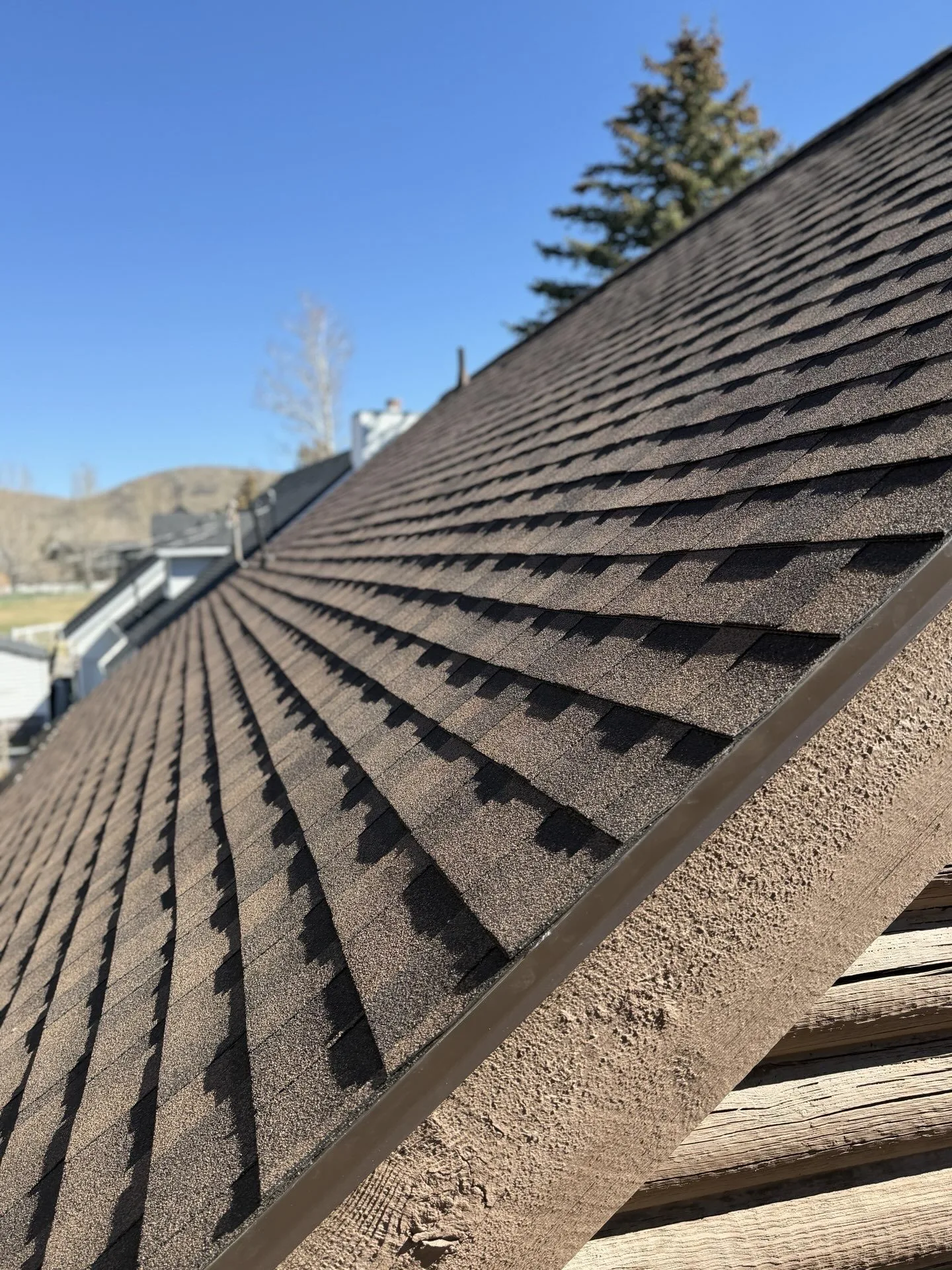
Roughly 80% of Utah homes have asphalt shingle roofs. The reason is straightforward: they offer the best balance of cost, performance, and availability. For most homes along the Wasatch Front — from Ogden to Provo — asphalt shingles are the practical choice.
Standard architectural shingles (also called dimensional or laminate) are the baseline for new installations. They provide a 25-35 year lifespan in Utah conditions, handle moderate hail, and come in a wide range of colors and profiles. Brands like GAF Timberline HDZ, Owens Corning Duration, and CertainTeed Landmark are the workhorses of the Utah roofing market.
Class 4 impact-resistant shingles are the upgrade that makes the most sense in Utah. Products like CertainTeed Landmark IR, GAF Timberline AS II, and Owens Corning Duration FLEX are engineered to withstand 2-inch hail impacts (tested to UL 2218 standards). The insurance premium discounts — typically 10-28% in Utah — often pay back the material cost difference within 3-5 years.
Metal Roofing: Built for Mountain Country
Standing seam metal roofing is the premium choice for Utah mountain homes. In Park City, Heber City, Midway, and other communities above 5,500 feet, metal roofing’s advantages compound: it sheds snow efficiently, handles extreme freeze-thaw cycling without degradation, and lasts 50-70 years with virtually zero maintenance.
The upfront cost is higher — typically 2-3x the cost of asphalt shingles. But when you factor in the 50+ year lifespan (vs. 25-35 for shingles), zero maintenance, and the elimination of 1-2 complete re-roofs over the same period, the lifetime cost often favors metal.
For valley homes in Salt Lake City, Sandy, or West Jordan, metal roofing is a premium upgrade rather than a necessity. The UV performance is excellent, but the value proposition is strongest at elevation where snow loads and temperature extremes are most severe.
Concrete & Clay Tile: Durability With Caveats
Tile roofing offers 50+ year durability and a distinctive aesthetic. However, it comes with significant considerations for Utah installations. The weight — typically 900-1,100 pounds per square (vs. 250-350 for asphalt) — requires structural reinforcement that many existing Utah homes don’t have. The freeze-thaw cycling in Utah can crack improperly installed tiles, and hail damage to tile is expensive to repair.
Tile roofing works best on new construction where the structure is designed for the weight, and in lower-elevation Utah communities where freeze-thaw cycling is less extreme. In mountain communities, the freeze-thaw risk makes tile a poor choice.
Synthetic Shake: The Modern Alternative
Synthetic shake products (like DaVinci Roofscapes or Brava) offer the look of natural cedar shake without the fire risk, maintenance, and short lifespan. These polymer-based products are rated for Utah’s UV exposure, carry Class 4 impact ratings, and typically last 40-50 years.
The cost falls between asphalt and metal. For Utah homeowners who want the aesthetic of shake — particularly in mountain communities with HOA requirements or design guidelines — synthetic shake eliminates the drawbacks of natural wood while meeting fire codes.
Utah Climate Factors That Matter Most
UV exposure: Utah ranks among the highest states for UV intensity. At Salt Lake City’s elevation (4,226 feet), UV radiation is roughly 15% stronger than at sea level. This accelerates shingle aging and color fade. Look for materials with high UV resistance ratings.
Hail: The Wasatch Front gets hit by significant hailstorms annually, primarily April through August. Class 4 rated materials provide the best protection and insurance savings.
Snow load: Utah mountain communities require roofing systems rated for ground snow loads of 40-100+ psf. This affects both material choice and structural design.
Freeze-thaw cycling: Utah’s dramatic temperature swings — often 40+ degrees in a single day during spring and fall — stress roofing materials through repeated expansion and contraction. Metal handles this best; clay tile handles it worst.