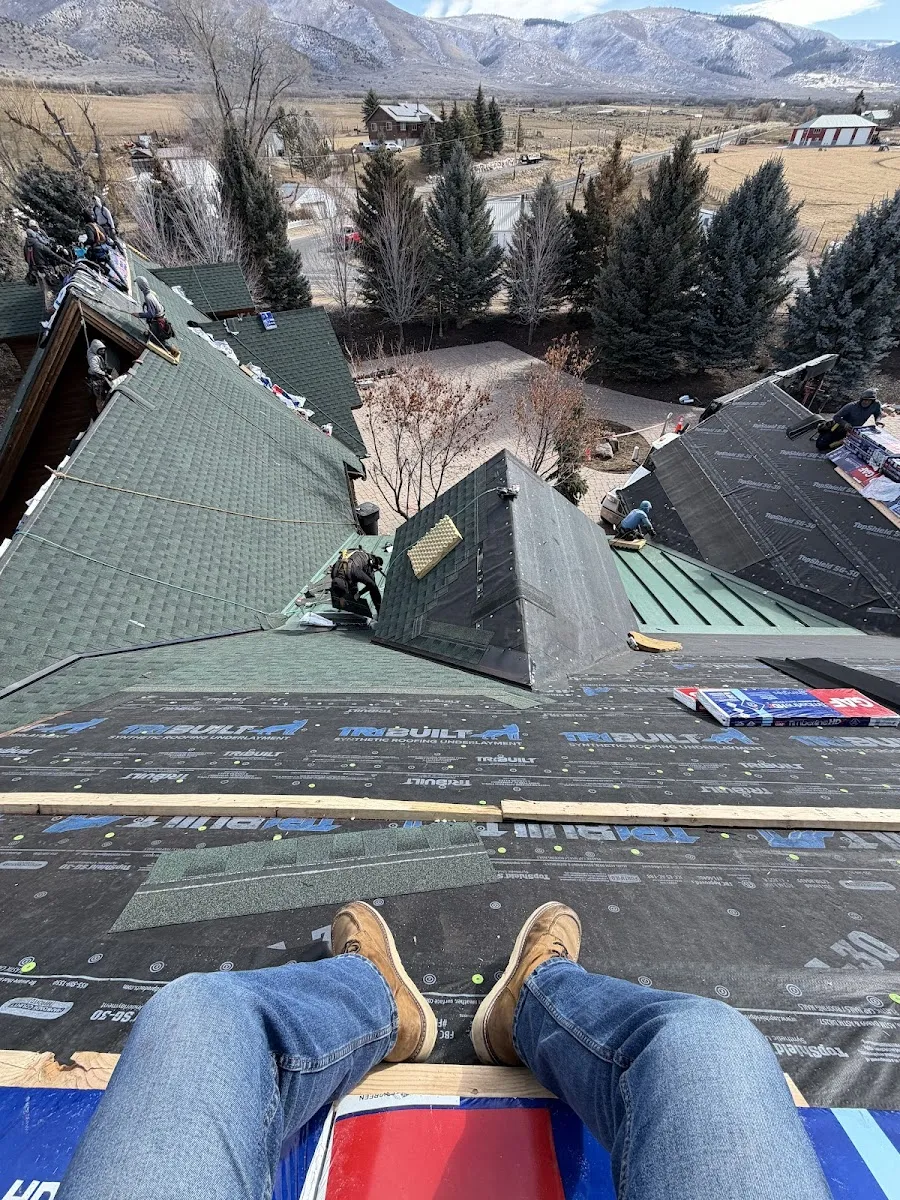
Spring along the Wasatch Front brings unpredictable weather, and Sandy sits right in the crosshairs. Between March and June, cold air funneling off the Wasatch Range collides with rising warm air across the Salt Lake Valley floor, producing hailstorms that can drop marble-to-golf-ball-sized ice on neighborhoods from the Sandy Bench down to the 10600 South corridor. If you live in neighborhoods like Pepperwood, Alta Canyon, or Dimple Dell Estates, your roof is exposed every season.
This guide covers how to spot hail damage, what to do immediately after a storm, and how Frame Roofing Utah in Sandy helps homeowners get their roofs back to full strength — often at little or no project costs through insurance.
Common Hail Damage Issues in Sandy
Sandy's housing stock ranges from 1970s–80s split-levels near the old downtown to brand-new builds in the southeastern foothills. Hail affects each differently:
- Asphalt shingle roofs (most common): Hail dislodges granules, exposing the mat underneath. You'll see dark, circular bruises or bare spots. Even "small" hail can shorten shingle life by 5–10 years if left unaddressed.
- Tile and composite roofs: Found on newer Sandy homes, these crack or chip rather than bruise. Cracked tiles let water in at the underlayment.
- Metal roofs: Dent but rarely leak from hail alone. However, cosmetic damage still qualifies for insurance claims in many cases.
- Flat/commercial roofs: Membrane punctures are the main risk. Sandy's small-business corridor along State Street and 700 East has many flat-roofed buildings that owners forget to inspect.
Beyond the roof surface, check for:
- Dented gutters, downspouts, and flashing
- Cracked skylights or roof vents
- Damage to AC units or solar panels on the roof
What to Check Right After a Hailstorm in Sandy
Within the first 24 hours:
- Walk the perimeter — look for hail hits on window sills, downspouts, siding, and outdoor AC units. If those surfaces show dents, your roof almost certainly took hits too.
- Check the gutters — scoop out a handful of gutter debris. If you see a pile of dark, gritty granules (more than normal), shingles are losing their protective layer.
- Photograph everything — date-stamped photos from your phone are gold for insurance claims. Shoot the ground hail (if still visible), siding dings, and gutter granules.
- Do NOT climb the roof yourself — a wet, granule-covered roof after a storm is dangerously slick. Leave the roof-level inspection to a licensed contractor.
- Call your insurance company — report the storm event. In Utah you typically have one year to file, but earlier is better. Your agent will assign an adjuster.
Within the first week:
Schedule a professional roof inspection. Frame Roofing Utah offers free hail-damage inspections for Sandy homeowners. We document every hit with photos and a written report you can hand directly to your adjuster.
When to Call a Roofer vs. DIY
DIY is fine for:
- Cleaning gutters and downspouts after a storm
- Photographing ground-level damage for your records
- Placing a bucket under an active interior drip as a temporary measure
Call a professional when:
- You see any granule loss, cracked shingles, or dented flashing
- There is an active leak — even a "small" drip can cause mold in Sandy's semi-arid climate because attic moisture gets trapped
- Your home is more than 15 years old — older Sandy homes (Pepperwood, Hidden Valley) often have original roofs that were already near end-of-life before the storm
- You plan to file an insurance claim — adjusters take contractor-documented damage reports far more seriously than homeowner photos alone
How Frame Roofing Utah Handles Hail Damage Repair in Sandy
- Free on-site inspection — We come to your Sandy home, inspect every plane of the roof, and produce a detailed damage report with photos.
- Insurance coordination — We work directly with your adjuster so you don't have to translate roofing jargon. We've handled hundreds of claims across Salt Lake County and know what adjusters look for.
- Full repair or replacement — Depending on damage severity, we either repair the affected sections or replace the full roof. We use manufacturer-warrantied materials rated for Utah's freeze-thaw cycles.
- Cleanup and final walk-through — Magnetic sweeps for nails, full debris haul-off, and a walk-through with you before we close the job.
Most Sandy hail damage claims result in a full roof replacement covered by insurance, with the homeowner responsible only for their deductible.
How do I know if my Sandy roof has hail damage if I can't see it from the ground?
You often can't — that's why a professional inspection matters. Ground-level clues like dented gutters, dings on window trim, and granules in downspout runoff suggest your roof took hits too. We'll get on the roof safely and document everything.
Will filing a hail claim raise my homeowner's insurance rates?
In Utah, hail is classified as a weather event (Act of God), and most insurers do not surcharge for a single weather claim. If you've had multiple claims in 3–5 years, ask your agent before filing.
How long do I have to file a hail damage claim in Utah?
Most policies allow one year from the date of the storm. However, filing sooner means better evidence — hail damage becomes harder to prove as months pass and normal wear accumulates.
Can hail damage void my roof warranty?
Hail itself won't void a manufacturer warranty, but failing to repair documented damage can. If an inspection finds damage and you delay repairs, future leaks may not be covered.
Does Frame Roofing Utah work in my Sandy neighborhood?
Yes. We serve all Sandy ZIP codes — 84070, 84091, 84092, 84093, and 84094 — from the east bench to the valley floor.