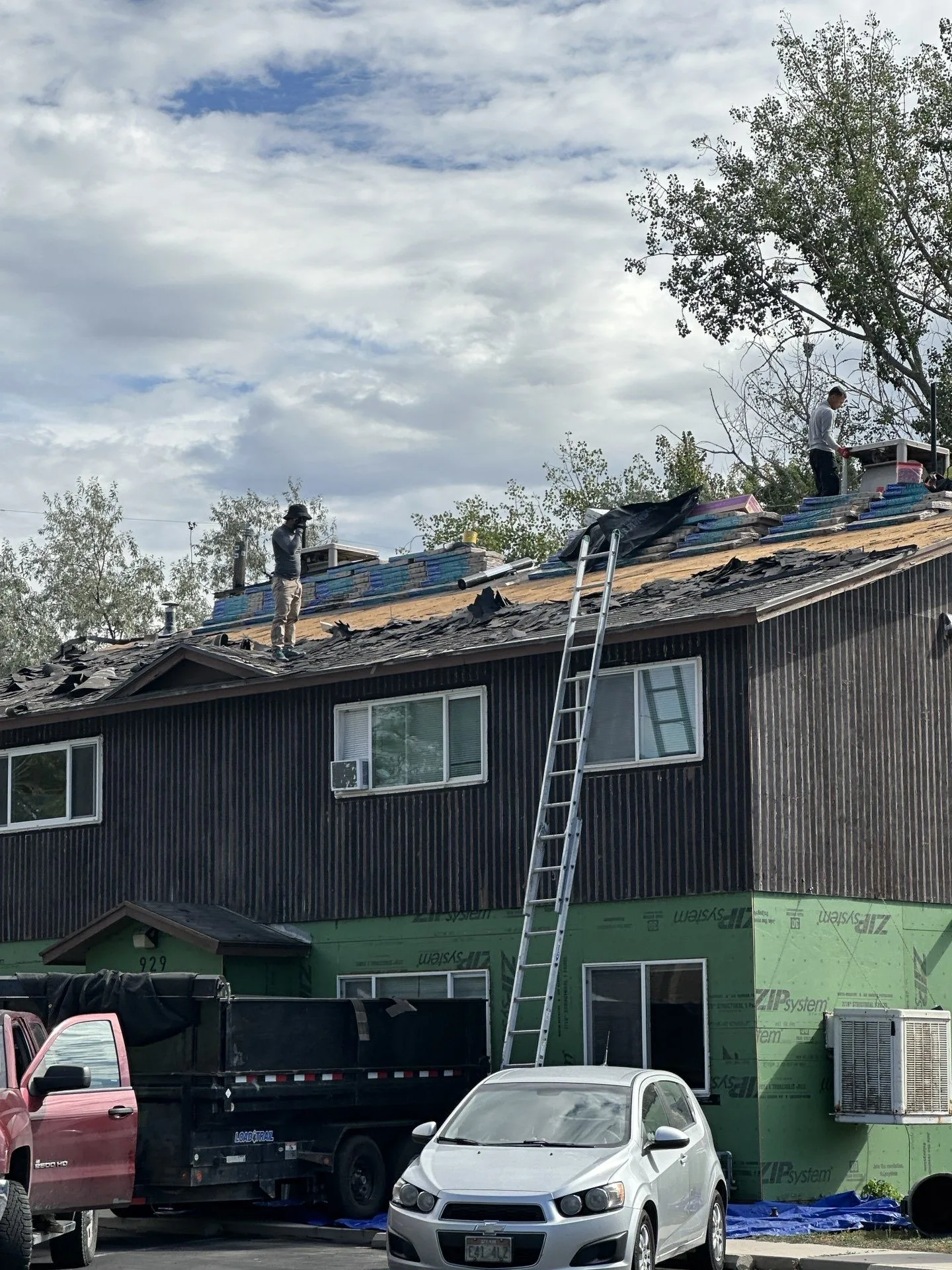
Commercial roofing in Utah presents challenges that residential roofs never face. Flat and low-slope roof systems must handle standing water from snowmelt, endure extreme UV exposure at altitude, survive hail impacts, and accommodate rooftop HVAC equipment, all while keeping your business dry and your energy costs manageable. Choosing the right commercial roofing system and maintaining it properly can mean the difference between a roof that lasts 30 years and one that fails in ten.
Thermoplastic polyolefin, or TPO, has become the dominant commercial roofing material along the Wasatch Front and throughout Utah. TPO is a single-ply membrane that is heat-welded at the seams, creating a watertight bond that is actually stronger than the membrane itself. This is a significant advantage in Utah where freeze-thaw cycles can work adhesive seams apart over time.
TPO's white reflective surface is particularly valuable in Utah. At our elevation, UV radiation is 15 to 25 percent more intense than at sea level. A white TPO membrane reflects solar energy rather than absorbing it, which reduces cooling costs in summer and slows the UV degradation that shortens roof life. Most TPO manufacturers offer 20 to 30 year warranties when the membrane is installed by a certified contractor.
The typical cost for a TPO commercial roof in Utah ranges from $5.50 to $8.50 per square foot installed, depending on membrane thickness, insulation requirements, and the complexity of the roof including penetrations for HVAC units, vents, and skylights.
Ethylene propylene diene monomer, known as EPDM, is a synthetic rubber membrane that has been used on commercial buildings since the 1960s. EPDM is black, which means it absorbs heat rather than reflecting it. This can be an advantage in Utah's cold winters by helping with snowmelt, but it increases cooling costs in summer.
EPDM's primary strength is its flexibility in cold temperatures. While TPO can become brittle in extreme cold, EPDM remains flexible down to negative 40 degrees, making it an excellent choice for buildings in Park City, Heber Valley, and other high-elevation Utah locations that experience extended periods of sub-zero temperatures. EPDM roofs are also easier and less expensive to repair than TPO since patches can be applied with adhesive rather than requiring heat welding equipment.
The main weakness of EPDM in Utah is its seams. Unlike TPO's heat-welded seams, EPDM seams are joined with adhesive or tape, which can fail over time especially under Utah's intense UV exposure. Regular inspection and maintenance of EPDM seams is essential for long-term performance.
Modified bitumen is an evolution of the traditional tar-and-gravel built-up roof that dominated commercial construction for decades. It consists of asphalt modified with rubber or plastic polymers, applied in layers over the roof deck. Modified bitumen offers excellent puncture resistance, which matters on commercial roofs where foot traffic from HVAC technicians is common.
In Utah, modified bitumen is often used on restaurants, auto shops, and industrial buildings where the roof is subject to grease, chemical exposure, or heavy equipment. It handles thermal cycling well and provides good waterproofing even on roofs with minimal slope. Installation costs fall between TPO and EPDM, typically $6 to $9 per square foot.
Every commercial roof in Utah should be inspected at minimum twice per year, once in spring after the snow load season ends and once in fall before winter begins. Additional inspections should follow any significant weather event including hailstorms, high wind events, and heavy wet snowfalls.
During inspections, your contractor should check all seams and flashings for separation or deterioration, examine the membrane for punctures or tears especially around rooftop equipment, verify that drains and scuppers are clear and functioning, and assess the overall condition of the membrane surface for signs of UV degradation, bubbling, or ponding water.
Ponding water is a particular concern on flat commercial roofs in Utah. Water that remains on the roof for more than 48 hours after precipitation accelerates membrane deterioration and adds structural load. If your roof has chronic ponding areas, installing tapered insulation to improve drainage is one of the most cost-effective improvements you can make.
Utah has adopted the International Building Code with state-specific amendments. Commercial roofing in Utah must meet specific requirements for wind uplift resistance, fire rating, and energy efficiency. The state energy code requires minimum R-values for roof insulation that have increased in recent code cycles. New commercial roof installations must meet current energy code requirements even when replacing an existing roof, which often means adding insulation during the re-roof process.
Permits are required for all commercial roofing work in Utah. Your roofing contractor should pull the necessary permits and schedule required inspections as part of their scope of work. Working without permits can result in fines, voided warranties, and complications when you eventually sell the property.
Commercial roofing requires different skills and equipment than residential work. When evaluating contractors, verify that they hold a Utah contractor license with a commercial roofing classification, carry adequate liability insurance with limits appropriate for your building's value, maintain current workers compensation coverage, and hold manufacturer certifications for the specific roofing system you are considering. Manufacturer certifications matter because they determine the warranty terms available for your project. A roof installed by a non-certified contractor may carry only a material warranty with no labor coverage, leaving you exposed to the most expensive component of any future repair.
Frame Roofing Utah provides commercial roofing services across the Wasatch Front and surrounding areas:
We inspect commercial properties across the Wasatch Front. Licensed, insured, and manufacturer-certified for TPO, EPDM, and modified bitumen systems.
Call (435) 292-8802