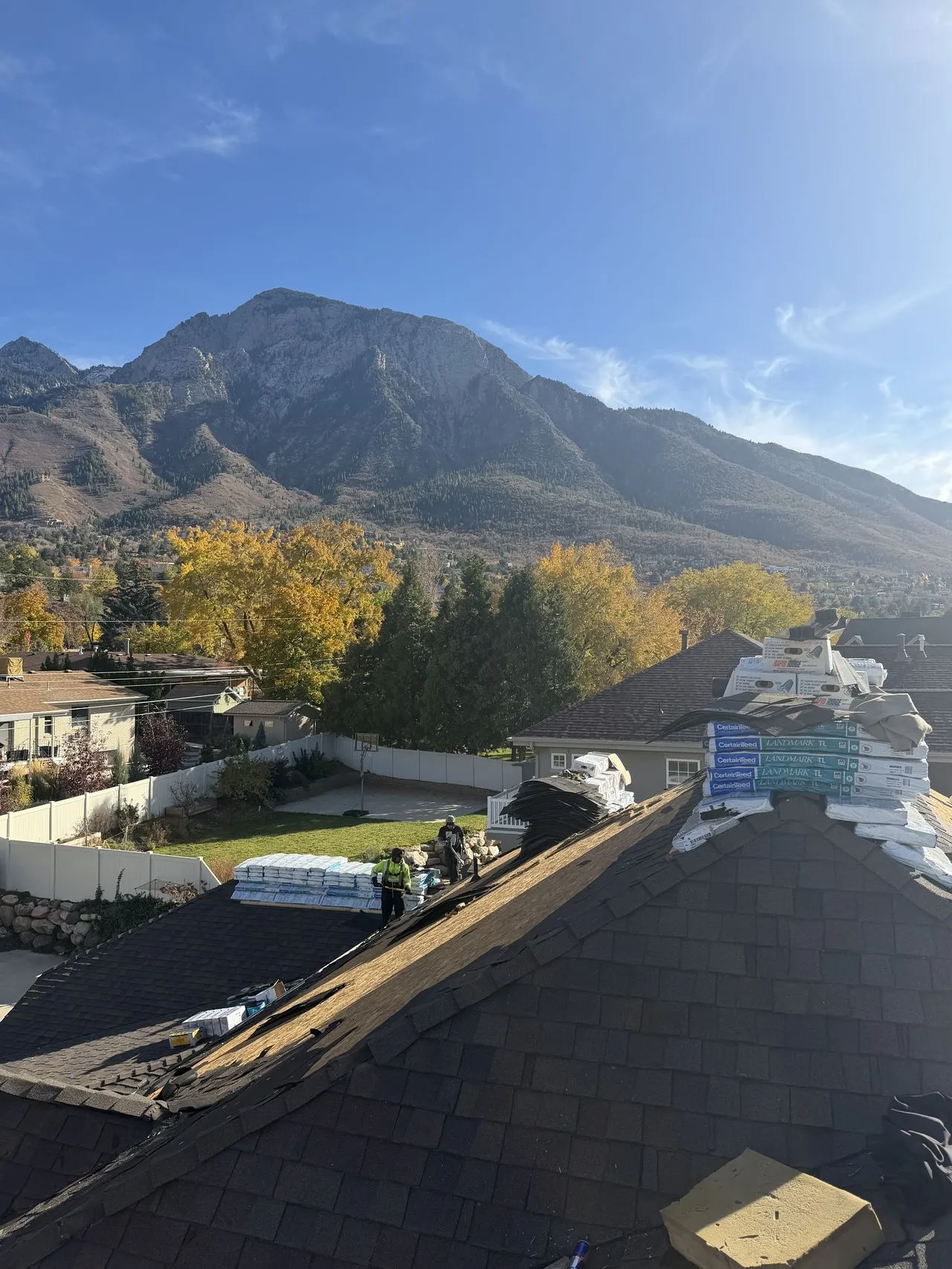
Riverton sits in the heart of Utah's South Valley hail corridor. The geography that makes the area attractive to homeowners — nestled between the Oquirrh Mountains and the Jordan River — also creates atmospheric conditions that produce frequent and intense hailstorms from late spring through early fall. Riverton, Herriman, Bluffdale, and the surrounding 84096 zip code area consistently rank among the hardest-hit communities for hail damage along the entire Wasatch Front.
Hailstorms form when strong updrafts in thunderstorm cells carry moisture upward into freezing temperatures where ice accumulates in layers. The Oquirrh Mountains to the west force warm, moisture-laden air upward as storms move east across the Tooele Valley, intensifying the updrafts that create hail. By the time these storms reach Riverton and Herriman, they have had the perfect conditions to produce damaging hail, often ranging from pea-sized to quarter-sized and occasionally reaching golf ball dimensions.
The south valley communities also sit at elevations between 4,500 and 5,000 feet, which means hailstones have less distance to fall and less time to melt before impact. The result is that Riverton homeowners experience hail damage more frequently and more severely than homeowners in lower-elevation areas of the Salt Lake Valley.
A proper hail damage inspection is much more than glancing at your roof from the driveway. When a licensed inspector from Frame Roofing Utah examines your Riverton home after a hailstorm, they follow a systematic process designed to identify every type of hail damage and document it thoroughly for your insurance claim.
Asphalt shingles are coated with ceramic granules that protect the underlying asphalt from UV degradation. When hail strikes, it dislodges these granules, exposing the dark asphalt beneath. Fresh granule loss appears as dark spots or patches on the shingle surface. An inspector will check your gutters and downspout extensions for accumulated granules, which is a reliable indicator of widespread hail impact even when individual hits are hard to see from a distance.
A bruised shingle has suffered an impact that compresses the asphalt mat beneath the granule surface without necessarily cracking the shingle or creating an obvious mark. Bruising compromises the shingle's structural integrity and shortens its lifespan significantly. Detecting bruises requires physically touching the shingle — a trained inspector will press on suspected impact areas to feel for the soft, spongy texture that indicates a bruise beneath the surface. This is one reason why professional inspections catch damage that homeowners and even some adjusters miss.
Larger hailstones can crack shingles on impact, creating fractures that allow water to penetrate to the underlayment and decking below. Cracks may follow the line of the hailstone impact or radiate outward from the point of contact. On older shingles that have already lost flexibility due to age and UV exposure, hail impacts are more likely to cause cracking because the asphalt has become brittle.
Hail does not just damage shingles. Metal flashings around chimneys, vents, and skylights can be dented and deformed, breaking the watertight seal they are designed to maintain. Roof vents, pipe boots, and ridge vent covers are also vulnerable. Your inspector will examine every roof penetration and accessory for hail damage as part of the complete inspection.
After you file a hail damage claim, your insurance company will send an adjuster to inspect your roof. The adjuster's job is to assess the damage and determine what the insurance company will pay for. Understanding this process helps you get a fair outcome.
The adjuster will typically spend 30 to 60 minutes on your property, examining the roof, siding, windows, and any other exterior components that may have been damaged. They use a software program called Xactimate to generate a scope of work and cost estimate based on local labor and material rates. The initial adjuster estimate may not capture everything, which is why having your roofing contractor present during the inspection is so valuable.
If the adjuster's estimate falls short of the actual repair cost, your contractor can file a supplement with additional documentation showing the damage that was missed or the items that were underpriced. Supplementing is a normal part of the insurance claims process and is not adversarial — it is simply making sure the scope of work accurately reflects the damage.
In Utah, most homeowners insurance policies allow you to file a hail damage claim within one year of the date of the storm. However, filing sooner is always better for several reasons. First, the damage is fresh and easier to document. Hail damage that has been exposed to months of weather becomes harder to distinguish from normal wear. Second, insurance companies process claims faster when they are not dealing with a backlog of year-old filings. Third, getting your roof repaired promptly prevents secondary damage from water infiltration through the compromised shingles.
If you are unsure whether your roof has hail damage, get a free inspection before the deadline passes. It costs you nothing to have a professional look, and you may be leaving thousands of dollars in legitimate insurance benefits on the table if you skip it.
The decision between repairing and replacing a hail-damaged roof depends on the extent and pattern of the damage. If hail impacts are limited to one slope or a small area, targeted repairs may be sufficient. Your contractor will replace the damaged shingles, matching the existing product as closely as possible, and ensure the surrounding area is properly sealed.
When hail damage is widespread across multiple slopes, most insurance companies will approve a full replacement because the cumulative impact has shortened the roof's useful life below a reasonable threshold. A full replacement gives you a completely new roof system with a full manufacturer warranty, which is often the better long-term outcome for Riverton homeowners who know their roof will face hail again in the coming years.
While you cannot prevent hail, you can make your roof more resilient. Impact-resistant shingles rated Class 3 or Class 4 on the UL 2218 scale are designed to withstand hail impacts that would damage standard shingles. Many Utah insurance companies offer premium discounts of 10 to 28 percent for homes with Class 4 impact-resistant shingles, which can offset the higher material cost within a few years. When it comes time for your next roof replacement, ask your contractor about impact-resistant options — in Riverton's hail corridor, they are one of the smartest investments you can make.
We inspect roofs across Riverton, Herriman, Bluffdale, South Jordan, and all of the South Valley. Free inspection, no obligation, and we document the damage so your claim is well-supported.
Call (435) 292-8802