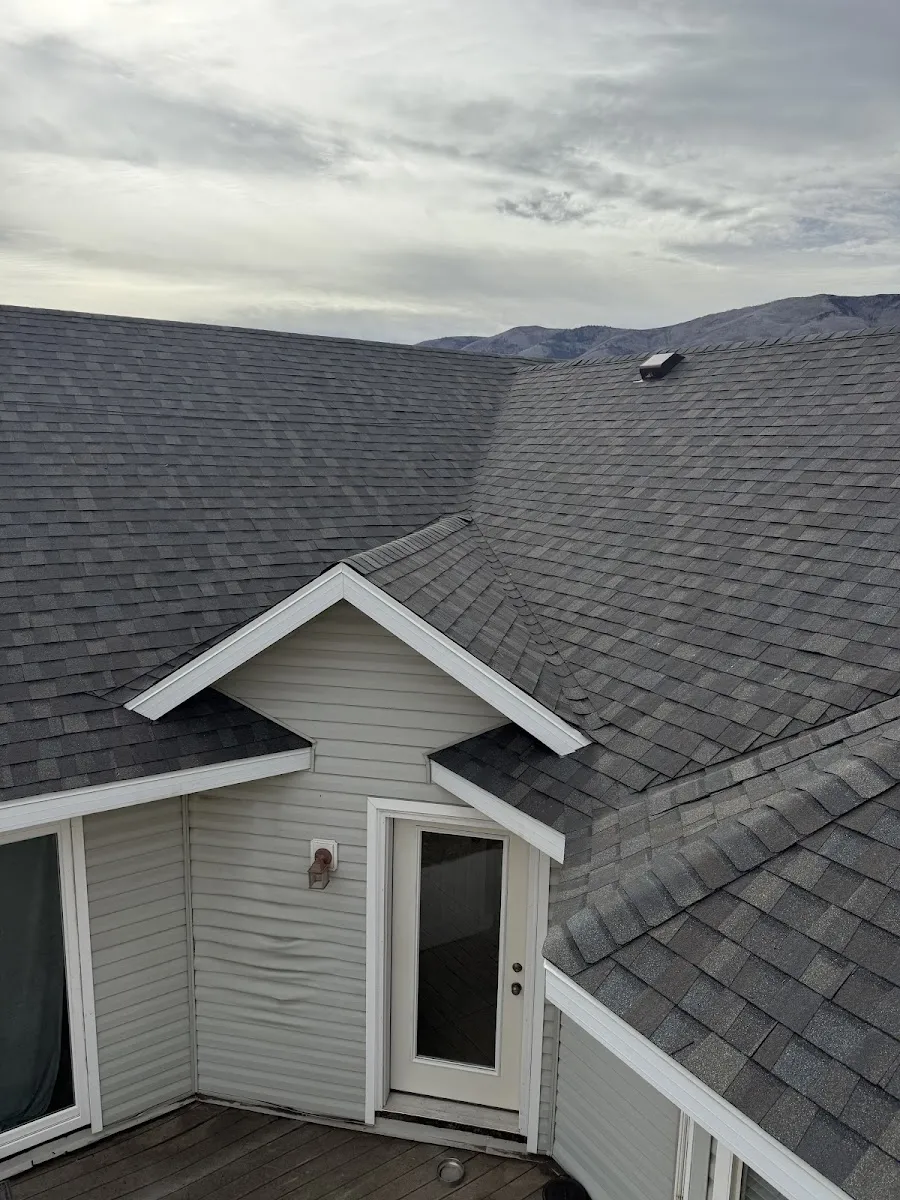
Living in Provo means your roof regularly contends with some of Utah's most demanding weather. Hail, high winds, heavy rain, and falling debris all take their toll — sometimes in a single storm event. Understanding how these forces affect your roofing system gives you the knowledge to protect your investment thoughtfully and make confident decisions when damage occurs.
This guide walks through the types of storm impact common to Provo, what a professional assessment uncovers, and how to approach repair or replacement decisions from a position of clarity rather than urgency.
How Provo's Storm Corridor Affects Your Roof
Provo's geographic position places it squarely in Utah's most active storm corridor. The convergence of warm valley air with cold fronts descending along the Wasatch Range creates the atmospheric instability that drives severe weather — particularly during spring and early summer months.
This means Provo homeowners can expect periodic hail events, wind gusts that test every fastener and flashing joint on your roof, and rainfall volumes that find any existing vulnerability. It's not a matter of if storms will affect your roof — it's a matter of how well your roofing system is built to handle them.
Understanding Each Type of Storm Impact
Hail Damage
Hail is the most common cause of storm-related roof damage in Provo. Impact dislodges protective granules from asphalt shingles, creating patches of accelerated UV degradation. Larger hailstones fracture the fiberglass mat beneath, compromising the shingle's structural integrity. These impacts accumulate — even a moderate hail event affects your roof's long-term performance by reducing the protective barriers between your home and the elements.
Wind Damage
Provo experiences straight-line winds and microbursts that can exceed 60 mph. These forces lift shingle tabs, displace ridge caps, and stress flashing around vents, chimneys, and other roof penetrations. Wind damage is particularly insidious because it often creates openings that aren't visible from the ground but allow moisture intrusion with the next rainfall.
Rain & Moisture Intrusion
Heavy rainfall itself doesn't damage a healthy roof — but it ruthlessly exposes every weakness. Storm-driven rain finds hairline fractures, lifted shingles, and compromised flashing, carrying water into your attic space where it contacts insulation, framing, and electrical systems. The secondary damage from moisture intrusion often exceeds the cost of the original roof repair.
Debris Impact
Provo's mature tree canopy adds beauty to neighborhoods but creates puncture risk during storms. Branch impacts can penetrate roofing materials entirely or strip shingles and break flashing connections. Even smaller debris scrapes and displaces protective granule coating across wide areas.
What types of storm damage affect Provo roofs most frequently?
Hail is the most frequent cause of storm-related roof damage in Provo during spring and early summer, followed by high-wind events that can lift or displace shingle tabs and compromise flashing. Heavy rain compounds existing vulnerabilities, and falling debris can cause puncture damage. A professional inspection identifies all types of storm impact, including damage that isn't visible from the ground.
What a Thorough Professional Assessment Reveals
The most important thing to understand about storm damage: the majority of it isn't visible from your yard. You can see perhaps 20% of your roof's surface from ground level. The valleys, far slopes, and low-pitch sections where damage concentrates are the areas you can't evaluate without climbing up.
A qualified professional assessment covers every component of your roofing system:
- Surface material evaluation — mapping granule loss patterns, fracture locations, and displacement across every roof plane to determine damage density and severity
- Flashing and penetration inspection — checking every vent, chimney, skylight, and exhaust penetration for displacement, bending, or separation that creates moisture pathways
- Underlayment and decking assessment — evaluating whether impact has compromised the layers beneath your visible roofing, which determines whether repairs or replacement are appropriate
- Gutter and drainage system check — dented gutters and displaced downspouts indicate the force of the storm event and often reveal corresponding roof damage in adjacent areas
- Comprehensive photographic documentation — creating a detailed record of findings that serves as a baseline for monitoring, supports insurance discussions, and informs repair planning
Frame Roofing Utah provides complimentary professional assessments for Provo homeowners. The goal isn't to sell you something — it's to give you complete, documented clarity about your roof's condition so you can make informed decisions on your own timeline.
Repair vs. Replacement: A Decision Framework
Choosing between repair and replacement is one of the most significant decisions you'll make about your home. Here's how to think about it clearly:
When targeted repair makes sense: Your roof is relatively new, damage is concentrated in specific areas, and the surrounding materials are in strong condition. Quality repairs restore full function and extend your roof's service life without the investment of full replacement.
When replacement is the better investment: Damage spans multiple roof planes, your roof is approaching the end of its expected lifespan, or the storm has exposed pre-existing vulnerabilities that repair alone won't resolve. Replacement provides a complete fresh start — and it's often an opportunity to upgrade to materials with significantly better storm resilience.
The insurance dimension: Your homeowner's policy typically covers sudden storm damage. Thorough professional documentation ensures the full scope of damage is accurately captured, which helps your insurance process proceed fairly. Frame Roofing Utah provides clear, honest documentation that supports your claim — we work alongside the process rather than trying to manipulate it.
How do I know whether my Provo roof needs repair or replacement after a storm?
The right approach depends on your roof's age, the extent and distribution of damage, and your long-term goals. Localized damage on a newer roof often warrants targeted repair. Widespread damage across multiple planes — or storm damage on an aging roof — frequently makes replacement the better investment, especially when upgraded impact-resistant materials can improve resilience for decades. A thorough professional assessment provides the data you need to decide confidently.
Building Long-Term Storm Resilience
Whether you're addressing current damage or planning proactively, these investments make your Provo roof substantially more resilient against future storms:
- Impact-resistant shingles — Class 4 rated materials are engineered to absorb hail energy without fracturing, and many insurance providers offer premium discounts for their installation
- High-quality underlayment systems — synthetic underlayment creates a robust secondary barrier that protects your decking even when surface materials are compromised
- Proper flashing and sealing — every penetration point is a potential vulnerability; quality materials and precise installation technique make the difference between a flashing that holds for decades and one that fails in the next storm
- Adequate ventilation design — proper attic ventilation prevents moisture accumulation that compounds storm damage and creates conditions for mold and structural deterioration
- Annual professional inspection — catching minor issues before they become expensive problems, and maintaining a documented history of your roof's condition over time
Provo's storm exposure is a permanent geographic reality. The difference between a roof that needs repair after every significant weather event and one that performs reliably year after year comes down to material quality, installation craftsmanship, and consistent professional maintenance.
The Frame Roofing Utah Approach
We believe the roofing industry has earned its reputation problems through high-pressure sales tactics and storm-chasing behavior. Frame Roofing Utah operates differently.
We start with a thorough, honest assessment — documenting what we find with detailed photography and clear explanation. We tell you what needs attention now, what can be monitored, and what your options are. We provide straightforward estimates based on the actual work required, not on maximizing your insurance payout.
Our installation teams follow manufacturer specifications precisely, using quality materials and proper techniques that protect both your warranty and your investment. We coordinate professionally with your insurance process when applicable, providing the documentation needed for fair resolution.
No pressure. No manufactured urgency. Just expert assessment, quality craftsmanship, and a genuine commitment to protecting your Provo home.